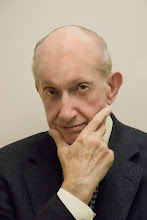
by H.N. Burdett
Among the more fascinating books published during the past year was George W. Bush's Decision Points. Presidential memoirs are, of course, opportunities to present the case for the defense before historians, journalists and other assorted experts and upstarts have a chance to sharpen their long knives.
In this instance, there was an element of urgency. Had Nathan Miller lived to revise his book, Star-Spangled Men: America's 10 Worst Presidents, the 43rd President of the United States not only might well have appeared on the list, he might even have been at the very top.
On Bush's watch, pre-emptive war was waged against a nation erroneously believed to have had weapons of mass destruction leading to more than 100,000 verified Iraqi civilians and 3,000 Americans killed, as well as some 20,000 seriously wounded; the federal response was abysmally slow and inefficient to a category 5 hurricane that slammed into the Gulf Coast, wreaking havoc on parts of Mississippi, Alabama and Louisiana, killing 1,500 and leaving tens of thousands homeless; and, after four years of record surpluses under the Clinton Administration, the Bush Administration ran annual deficits of more than $300 billion.
By utilizing anecdotes rather than reciting treatises on policy, which various sources allege never much interested Bush, he often reveals perhaps more than he actually intended. Particularly intriguing were Bush's impressions of his closest advisers and aides, including Vice President Dick Cheney, Secretary of State Colin L. Powell, Secretary of Defense Donald Rumsfeld and his longtime political guru, Karl Rove, whom he refers to as like a "political mad scientist."
After mulling over his short-listed candidates for vice president, Bush "seriously thought about offering the job" to Missouri Senator Jack Danforth, who had "earned my respect with his defense of Clarence Thomas during his Supreme Court confirmation of 1991." But he turned to Dick Cheney, whose "experience was more extensive and diversified than that of anyone else on my list." Besides serving as President Gerald Ford's chief of staff and George H. W. Bush's secretary of defense, Cheney had run a global business and served a decade in Congress without losing an election.
"While Dick knew Washington better than about anyone, he didn't behave like an insider," Bush recalls. "He allowed subordinates to get credit. When he spoke at meetings, his carefully chosen words carried credibility and influence.
"Like me, Dick was a westerner. He enjoyed fishing and spending time outdoors. . . He had a practical mind and a dry sense of humor. He told me once he had started at Yale a few years before me, but the university asked him not to come back. Twice. He said he had once filled out a compatibility test designed to match his personality with the most appropriate career. When the results came in, Dick was told he was best suited to be a funeral director."
Karl Rove opposed Cheney's selection. Bush invited Rove to the governor's mansion to make his case. "I invited one person to listen in," Bush says. "That would be Dick. I believe in airing out disagreements. I also wanted to cement a relationship of trust between Karl and Dick in case they ended up together at the White House."
Rove contended "Cheney's presence on the ticket would add nothing to the electoral map, since Wyoming's three electoral votes were among the most reliably Republican in the country." Cheney's record in Congress was knee-jerk conservative and included some hot-button votes that could have been used against the ticket. And Cheney's heart condition "would raise questions about his fitness to serve." Furthermore, choosing George H. W. Bush's defense secretary "could make people question whether I was my own man." Bush 43 reveals that he did consult his father about the possibility of Cheney as vice president and that Bush 41 gave his former secretary of defense his blessing as a fine choice.
As Bush's first term was winding down, Cheney offered his resignation because, the president felt, a widespread impression persisted that the vice president was actually making all of the key White House decisions and by him leaving that notion would be disproved. While Bush says he appreciated the gesture, he told Cheney he wanted him at his side during a second term.
Secretary of Defense Rumsfeld also offered his resignation after photographs were released showing U.S. soldiers torturing Iraqi detainees. But the resignation was declined because Bush curiously claims he could think of no one to replace Rumsfeld.
Bush had initially wanted Rumsfeld to head the Central Intelligence Agency. But during his interview, Rumsfeld "laid out a captivating vision for transforming the Defense Department. He talked about making our forces lighter, more agile, and more readily deployed. . .Rumsfeld impressed me. He was knowledgeable, articulate and confident. As a former secretary of defense (25 years earlier, under Gerald Ford), he had strength and experience to bring major changes to the Pentagon. He would run the bureaucracy, not let the bureaucracy run him."
Bush says his first cabinet selection was an "easy" call: "Colin Powell would be my secretary of state." The two first met at Camp David in 1989 when Powell was chairman of the Joint Chiefs of Staff. Powell and Cheney were there to brief Bush's father on the surrender of Panamanian dictator Manuel Noriega.
"Colin was wearing his Army uniform," Bush recalls. "In contrast to the formality of his dress, he was good-natured and friendly. He spoke to everyone in the room, even bystanders like the president's children."
Bush was further impressed that Powell was admired both at home and abroad and could "credibly defend American interests and values, from a stronger NATO to freer trade. I believed Colin could be the second coming of George Marshall, a soldier turned statesman."
But there came a time when Bush had serious second thoughts about Secretary of State Powell.
In March 2001, a White House meeting was held on North Korea policy. The previous administration had offered concessions to North Korean dictator Kim Jong-il in return for his pledge to abandon that country's nuclear weapons programs. Bush maintains that the Clinton policy was a failure and he was determined that from then on, North Korea would have to change its behavior before America made concessions.
Early the next morning, he read an article in the Washington Post that began: "The Bush administration intends to pick up where the Clinton administration left off in negotiations with North Korea over its missile programs, Secretary of State Colin L. Powell said yesterday."
Bush was stunned. He figured the reporter must have misquoted Powell "because the story was the exact opposite of what we had discussed at the meeting." He phoned Condoleezza Rice and told her, "By the time Colin gets to the White House for the meeting, this had better be fixed."
"I had given Condi a daunting assignment," Bush writes. "She had to instruct the secretary of state, a world-famous former general, a generation older than she, to correct his quote. Later that morning, Colin came bounding into the Oval Office and said, 'Mr. President, don't worry. It's all been cleared up.'"
Bush also recounts how CIA director George Tenet recruited David Kay, the United Nations' chief inspector in Iraq in 1996, to lead a new inspection team to search for weapons of mass destruction in that country.
Following the inspection, Kay told Congress in October 2003 that Iraq's WMD programs spanned more than two decades, involved thousands of people, billions of dollars, and were elaborately shielded by security and deception operations that continued even beyond the end of Operation Iraqi Freedom.
"The left trotted out the mantra: 'Bush Lied, People Died,'" he says. "The charge was illogical. If I wanted to mislead the country into war, why would I pick an allegation that was certain to be disproven publicly shortly after we invaded the country? The charge was also dishonest. Members of the previous Washington administration, John Kerry and John Edwards, and the vast majority of Congress had also read the same intelligence that I had and concluded that Iraq had WMD. So had the intelligence agencies around the world. Nobody was lying. We were all wrong. The absence of WMD stockpiles did not change the fact that Saddam was a threat. In January 2004, David Kay said, 'It was reasonable to conclude that Iraq posed an imminent threat. . .What we learned during the inspection made Iraq a more dangerous place potentially than in fact we thought it was even before the war.'
"Still I knew the failure to find WMD would transform public perception of the war. While the world was undoubtedly safer with Saddam gone, the reality was that I had sent American troops into combat based in large part on intelligence that proved to be false. That was a massive blow to our credibility - my credibility - that would shake the confidence of the American people.
"No one was more shocked or angry than I was when we didn't find the weapons," Bush writes. "I had a sickening feeling every time I thought about it. I still do."
Bush, in fact, was so sickened that after it became apparent there were no WMD, he posed for photographs in which he turned one of the more horrific misuses of power by a United States commander-in-chief into the sickest of sick jokes. The cameras caught him mugging like a clueless chimpanzee, looking under White House furniture for weapons of mass destruction. Families of 3,000 young men and women who did not come home from Bush's pre-emptive war were not amused.
If a fair system of international justice existed, George W. Bush would not be living a life of ease at his Crawford, Texas ranch. He would be in the dock at The Hague responding to allegations of war crimes, along with Cheney, Rumsfeld and a few others who incessantly beat the drums for punishing two countries who had nothing to do with the 9/11 attacks. Meanwhile Osama bin Laden, who ordered the suicide assault on the World Trade Center and the Pentagon, continues to illude our forces while hooked up to his dialysis machine.
.
Friday, December 31, 2010

Tuesday, December 14, 2010
LOOKING BACK TO THE STONE AGE
By H.N. BURDETT
The tax cut for the wealthiest Americans triggered my memory of a piece published by the nonpareil, I.F. Stone, on May 13, 1968, on the Poor People's March on Washington that was to be held later in that same month. After I found the article, my intention was to quote from it and discuss it within the context of the tax-cut deal the Obama administration made with the Republicans in Congress. It was the best deal President Obama thought he could make during the lame duck session, especially since he is looking ahead to two years of choosing between stagnation, capitulation or compromise. Upon reading Stone's insightful column, however, I couldn't bring myself to excerpt the piece; it is just too damn good. So here it is in its entirety:
THE RICH MARCH ON WASHINGTON ALL THE TIME
By I.F. STONE
No other western country permits such a large proportion of its people to endure the lives we press on our poor. To make four-fifths of a nation more affluent than any people in history, we have degraded one-fifth mercilessly.
REPORT OF THE CITIZENS INQUIRY INTO HUNGER
To see the Poor People's March on Washington in perspective, remember that the rich have been marching on Washington ever since the beginning of the Republic. They came in carriages and they come on jets. They don't have to put up in shanties. Their object is the same, but few respectable people are untactful enough to call it handouts. Washington owes its very existence as the capital to a deal for the benefit of wealthy speculators. They had bought up the deflated bonds issued to finance the revolution, paying as little as 15 cents on the dollar to the needy original investors. The speculators wanted repayment at full face value. It was only by promising to move the capital from Philadelphia to a new city to be built on the Potomac that Alexander Hamilton could get enough Southern votes to swing the deal.
The fiscal and banking system of the new republic was thus solidly established on the basis of a $20 million handout to the rich and on the Hamiltonian theory that if the new government would channel enough of the national wealth to the top some of it would eventually trickle down. In the meantime the farmer and the consumer would pay the taxes and the tariffs to keep the investor fat and happy. Ever since then the public treasury and the public lands have been a major source of the great American fortunes down to our own day of never-ending oil depletion allowances. The tax structure and the laws bear the imprint of countless marches on Washington; these have produced billions in hidden grants for those who least need them. Across the facade of the U.S. Treasury should be engraved, "To him who hath shall be given."
One easy and equitable way to finance an end to abject poverty in this country would be to end the many tax privileges the wealthy have acquired. A 12-man committee of industrialists and financiers has just recommended to Governor Rockefeller of New York a form of that guaranteed income the marching poor will demand. The committee proposes a negative income tax to raise 30 million of our neediest above the poverty level. Instead of paying income taxes they would receive enough from the Treasury to bring their incomes up to a minimum of $3,300 a year for a family of four. The additional cost would be about $11 billion a year. That is what the more obvious tax loopholes for the rich now drain from the U.S. Treasury.
Few people realize that our present tax and welfare structure is such as to encourage the wealthy to speculate and the poor to vegetate. If a rich man wants to speculate, he is encouraged by preferential capital gains which give him a 25 percent cushion against losses and take less than half as much on his speculative gains as on his normal earnings. But if a poor man on relief took a part time job, he had until very recently to pay a 100 percent tax on his earnings in the shape of a dollar-for-dollar reduction in his relief allowance. Even now after a belated reform in the welfare system, a poor man on relief, after his first $30 a month in extra earnings, must turn back to the Treasury 70 cents on the dollar while the rich man need pay the Treasury only 25 cents of every dollar he wins on the market even when his normal income tax rate is more than 50 percent. Such is the topsy-turvy morality of the Internal Revenue laws.
A heart-breaking report on hunger by a Citizens Board of Inquiry has just lifted the curtain on why the poor are marching. In the richest country in the world people eat clay to still the pains of an empty belly, children come to school too hungry to learn, and the infants of the poor suffer irreversible brain damage from protein deprivation. Much of the crime in the streets springs from hunger in the home. Much of this hunger is also linked to hand-outs for those who do not need them. Some of its roots may be found in subsidy programs designed to encourage farmers to make more money by producing less food. The effect has been to push the poor off the land and into the ghettoes. A program designed 30 years ago designed ostensibly to help the desperate family farmer has become a source of huge handouts to big farmers and farm corporations.
In 1967 the 41.7 percent of farmers with incomes of less than $2,500 a year received only 4.5 percent of total farm subsidies paid by the government while the top 10 percent, many of them farm corporations or vertical trusts in food processing, received 64.5 percent of these subsidies. The contrast between these handouts for rich farming interests and the stingy surplus food allotments for the poor is dramatically displayed in the statistical appendices of the Citizens Report on Hunger. In the calendar year 1966 a quarter billion dollars in farm subsidies was paid to a lucky landowning two one-hundredths of one percent of the population of Texas while the 28.8 percent of its population below the poverty line received less than $8 million in all forms of food assistance. Such grotesque maldistribution of federal aid is not limited to the South. That same year the U.S. Treasury paid almost $36 million in farm subsidies to one-third of one percent of the population of Nebraska while only $957,000 in surplus food allotments went to the 26.1 percent of its population which is in poverty. One farm company in California, J.G. Boswell, was given $2,807,633 in handouts by the Treasury that year and the Hawaiian Commercial and Sugar Company got $1,236,355 in federal sweetening.
Such are the huge hogs that crowd our public trough. Other even bigger corporations live on the gravy that drips from the military and space programs. We may never reach the moon - or know what to do with it when we get there - but the race for it has already created a new generation of Texas millionaires. The arms race and the space race guarantee the annual incomes of many in the country club set.
Even before the marchers began arriving, the President at his latest press conference was already inviting them to leave. Their demands would be "seriously" considered, he said, "and then we expect to get on with running the government as it should be." For years "running the government as it should be," i.e., with a budget allocated 80 percent to the Pentagon and 10 percent to health, education and welfare.
Ours is a warfare, not a welfare state. And unless the better conscience of the country can be mobilized, it will wage war upon the poor, too. Only twice before in our history have the poor marched on Washington - Coxey's Army of the jobless back in 1894 and the bonus marchers in 1932. Both times they were easily dispersed by force. The last heartless chapter of the flinty Hoover Administration was the attack of General MacArthur's troops upon the encampment of the bonus marchers on the Anacostia flats. This time the shanties will not be burned down nor the poor scattered so easily. A clash would set off the hottest summer yet of our nascent civil war. The poor may prove an irresistible force. The Congress is certainly an immovable object.
At this dangerous juncture we need a crusade of the progressive well-to-do to supplement the efforts of the Poor People's March. We are glad to see that SANE and a group of other organizations is calling for demonstrations of stupport throughout the country for Saturday, May 25. We need volunteers to stand on street corners and collect money to feed the encampment of the poor in Washington. And we need an army of young white idealists to ring doorbells in the suburbs and awaken the middle class to the crisis the poor may precipitate. What lies ahead may be far more important than the election.
We wish the unaware millions of the suburbs could have heard the extraordinary collection of spokesmen for the poor whom the Reverend Ralph David Abernathy brought to Wesley A.M.E. Church for a preliminary rally here last week. The volcanic despair of our Negroes, Puerto Ricans, Indians, Spanish Americans and poor whites has thrown up new and unknown leaders able to present their case with an untaught and unmatchable eloquence. The descenders of the enslaved, the conquered and the dispossessed have found voices which makes one realize what human resources lie untapped among them. It was also thrilling in a time of rising separation to join hands again with blacks in singing, "We Shall Overcome" and to feel how truly this movement stems from Martin Luther King's teaching. If this fails, multi-racialism and non-violence will fail with it. Yet fail it must unless the middle class and the suburbs can be aroused to pressure Congress for the steps required to wipe out poverty. "There is nothing," Martin Luther King said, "except a tragic death wish, to prevent us from reordering our priorities, so the pursuit of peace will take precedence over the pursuit of war." Now is the time for the white and the fortunate to organize for this work of solidarity. This - it cannot be said too often - may be our last chance.
The tax cut for the wealthiest Americans triggered my memory of a piece published by the nonpareil, I.F. Stone, on May 13, 1968, on the Poor People's March on Washington that was to be held later in that same month. After I found the article, my intention was to quote from it and discuss it within the context of the tax-cut deal the Obama administration made with the Republicans in Congress. It was the best deal President Obama thought he could make during the lame duck session, especially since he is looking ahead to two years of choosing between stagnation, capitulation or compromise. Upon reading Stone's insightful column, however, I couldn't bring myself to excerpt the piece; it is just too damn good. So here it is in its entirety:
THE RICH MARCH ON WASHINGTON ALL THE TIME
By I.F. STONE
No other western country permits such a large proportion of its people to endure the lives we press on our poor. To make four-fifths of a nation more affluent than any people in history, we have degraded one-fifth mercilessly.
REPORT OF THE CITIZENS INQUIRY INTO HUNGER
To see the Poor People's March on Washington in perspective, remember that the rich have been marching on Washington ever since the beginning of the Republic. They came in carriages and they come on jets. They don't have to put up in shanties. Their object is the same, but few respectable people are untactful enough to call it handouts. Washington owes its very existence as the capital to a deal for the benefit of wealthy speculators. They had bought up the deflated bonds issued to finance the revolution, paying as little as 15 cents on the dollar to the needy original investors. The speculators wanted repayment at full face value. It was only by promising to move the capital from Philadelphia to a new city to be built on the Potomac that Alexander Hamilton could get enough Southern votes to swing the deal.
The fiscal and banking system of the new republic was thus solidly established on the basis of a $20 million handout to the rich and on the Hamiltonian theory that if the new government would channel enough of the national wealth to the top some of it would eventually trickle down. In the meantime the farmer and the consumer would pay the taxes and the tariffs to keep the investor fat and happy. Ever since then the public treasury and the public lands have been a major source of the great American fortunes down to our own day of never-ending oil depletion allowances. The tax structure and the laws bear the imprint of countless marches on Washington; these have produced billions in hidden grants for those who least need them. Across the facade of the U.S. Treasury should be engraved, "To him who hath shall be given."
One easy and equitable way to finance an end to abject poverty in this country would be to end the many tax privileges the wealthy have acquired. A 12-man committee of industrialists and financiers has just recommended to Governor Rockefeller of New York a form of that guaranteed income the marching poor will demand. The committee proposes a negative income tax to raise 30 million of our neediest above the poverty level. Instead of paying income taxes they would receive enough from the Treasury to bring their incomes up to a minimum of $3,300 a year for a family of four. The additional cost would be about $11 billion a year. That is what the more obvious tax loopholes for the rich now drain from the U.S. Treasury.
Few people realize that our present tax and welfare structure is such as to encourage the wealthy to speculate and the poor to vegetate. If a rich man wants to speculate, he is encouraged by preferential capital gains which give him a 25 percent cushion against losses and take less than half as much on his speculative gains as on his normal earnings. But if a poor man on relief took a part time job, he had until very recently to pay a 100 percent tax on his earnings in the shape of a dollar-for-dollar reduction in his relief allowance. Even now after a belated reform in the welfare system, a poor man on relief, after his first $30 a month in extra earnings, must turn back to the Treasury 70 cents on the dollar while the rich man need pay the Treasury only 25 cents of every dollar he wins on the market even when his normal income tax rate is more than 50 percent. Such is the topsy-turvy morality of the Internal Revenue laws.
A heart-breaking report on hunger by a Citizens Board of Inquiry has just lifted the curtain on why the poor are marching. In the richest country in the world people eat clay to still the pains of an empty belly, children come to school too hungry to learn, and the infants of the poor suffer irreversible brain damage from protein deprivation. Much of the crime in the streets springs from hunger in the home. Much of this hunger is also linked to hand-outs for those who do not need them. Some of its roots may be found in subsidy programs designed to encourage farmers to make more money by producing less food. The effect has been to push the poor off the land and into the ghettoes. A program designed 30 years ago designed ostensibly to help the desperate family farmer has become a source of huge handouts to big farmers and farm corporations.
In 1967 the 41.7 percent of farmers with incomes of less than $2,500 a year received only 4.5 percent of total farm subsidies paid by the government while the top 10 percent, many of them farm corporations or vertical trusts in food processing, received 64.5 percent of these subsidies. The contrast between these handouts for rich farming interests and the stingy surplus food allotments for the poor is dramatically displayed in the statistical appendices of the Citizens Report on Hunger. In the calendar year 1966 a quarter billion dollars in farm subsidies was paid to a lucky landowning two one-hundredths of one percent of the population of Texas while the 28.8 percent of its population below the poverty line received less than $8 million in all forms of food assistance. Such grotesque maldistribution of federal aid is not limited to the South. That same year the U.S. Treasury paid almost $36 million in farm subsidies to one-third of one percent of the population of Nebraska while only $957,000 in surplus food allotments went to the 26.1 percent of its population which is in poverty. One farm company in California, J.G. Boswell, was given $2,807,633 in handouts by the Treasury that year and the Hawaiian Commercial and Sugar Company got $1,236,355 in federal sweetening.
Such are the huge hogs that crowd our public trough. Other even bigger corporations live on the gravy that drips from the military and space programs. We may never reach the moon - or know what to do with it when we get there - but the race for it has already created a new generation of Texas millionaires. The arms race and the space race guarantee the annual incomes of many in the country club set.
Even before the marchers began arriving, the President at his latest press conference was already inviting them to leave. Their demands would be "seriously" considered, he said, "and then we expect to get on with running the government as it should be." For years "running the government as it should be," i.e., with a budget allocated 80 percent to the Pentagon and 10 percent to health, education and welfare.
Ours is a warfare, not a welfare state. And unless the better conscience of the country can be mobilized, it will wage war upon the poor, too. Only twice before in our history have the poor marched on Washington - Coxey's Army of the jobless back in 1894 and the bonus marchers in 1932. Both times they were easily dispersed by force. The last heartless chapter of the flinty Hoover Administration was the attack of General MacArthur's troops upon the encampment of the bonus marchers on the Anacostia flats. This time the shanties will not be burned down nor the poor scattered so easily. A clash would set off the hottest summer yet of our nascent civil war. The poor may prove an irresistible force. The Congress is certainly an immovable object.
At this dangerous juncture we need a crusade of the progressive well-to-do to supplement the efforts of the Poor People's March. We are glad to see that SANE and a group of other organizations is calling for demonstrations of stupport throughout the country for Saturday, May 25. We need volunteers to stand on street corners and collect money to feed the encampment of the poor in Washington. And we need an army of young white idealists to ring doorbells in the suburbs and awaken the middle class to the crisis the poor may precipitate. What lies ahead may be far more important than the election.
We wish the unaware millions of the suburbs could have heard the extraordinary collection of spokesmen for the poor whom the Reverend Ralph David Abernathy brought to Wesley A.M.E. Church for a preliminary rally here last week. The volcanic despair of our Negroes, Puerto Ricans, Indians, Spanish Americans and poor whites has thrown up new and unknown leaders able to present their case with an untaught and unmatchable eloquence. The descenders of the enslaved, the conquered and the dispossessed have found voices which makes one realize what human resources lie untapped among them. It was also thrilling in a time of rising separation to join hands again with blacks in singing, "We Shall Overcome" and to feel how truly this movement stems from Martin Luther King's teaching. If this fails, multi-racialism and non-violence will fail with it. Yet fail it must unless the middle class and the suburbs can be aroused to pressure Congress for the steps required to wipe out poverty. "There is nothing," Martin Luther King said, "except a tragic death wish, to prevent us from reordering our priorities, so the pursuit of peace will take precedence over the pursuit of war." Now is the time for the white and the fortunate to organize for this work of solidarity. This - it cannot be said too often - may be our last chance.
Friday, December 10, 2010
TAX-CUT DEAL: ENGINE FOR CHANGE?
Maybe the tipping point has been reached. Maybe Democrats will hereafter so maintain their anger over the tax-cut deal that they will go on the offensive. Maybe the party of Andrew Jackson, the very personification of American toughness and resolve, will stop whimpering like a horde of mama's boys about being picked on, and apart, by schoolyard bully Republicans. Maybe the party of Harry "Give 'em hell" Truman will now begin operating from a position of strength that should be the birthright of the champions of working men and women, of social justice, and of all of those unlucky enough to be bypassed when silver spoons were distributed. Just maybe.
Thus far Democrats of recent vintage have demonstrated scant inclination and even less stomach for taking on the wealthiest Americans who believe they are deserving of special favors from the political party for which they have paid and are paying handsomely, building in the process a powerful propaganda machine that almost routinely convinces the majority of the electorate to vote against its own interests.
It is the same Republican party that back in the mid-1930s fought against workmen's compensation and Social Security as a sure path to the perdition of socialism and communism. The same GOP that a few decades later blathered that Medicare and Medicaid would surely be the end of the great experiment in democracy forged by the founding fathers. The same GOP that only last year voted in lockstep against extending health insurance to some 30 million people who do not now have it.
It is the same GOP that has preached with conviction borne of exceptional hubris the mantra that laissez-faire capitalism is the heart and soul of the nation, that rules and regulations shackle the economy from seeking its own level. In other words, let Wall Street operate above and beyond the law and the people will inevitably prosper. Prime the pump from the top and wealth will trickle down to the rest of us.
Precisely this kind of thinking did less to spread wealth than it did to compound the fiction that right here in the United States every mother's son and daughter can line their pockets if only the smartest investors are allowed to put deals together and buy and sell totally unfettered. Prime it from the top and everyone prospers.
That kind of thinking led in time to Enron, Madoff, and such outrages as cigarette manufacturers expressing no moral reservations about spiking their product to ensure addiction. That kind of thinking brought the implosion of the U.S. economy and ultimately the global economy. Advertise something-for-nothing and the suckers will line up to get their 'share.' But meanwhile, the tail must continue to wag the dog.
And so, with the days of the lame duck Congress dwindling down -- one in which the Democrats have a paper majority in both the Houses, overstated by the inclusion of blue dogs who often enough have voted with the minority -- an onerous tax deal is struck. In the bargain, the GOP achieved its goal of extending the Bush tax cuts, including those for the wealthiest 2 per cent of Americans.
No one can guarantee how much of the tax reduction would bolster the economy against how much would serve to further bloat the deficit or lower unemployment. To say nothing of the likelihood that extensions of the tax cut will lead to it becoming permanent, with, as Princeton economist Paul Krugman termed it "devastating effects on the budget and the long-term prospects for Social Security and Medicare."
The tradeoff to assure welfare to the wealthiest includes the extension of benefits for the unemployed; a temporary cut in the payroll tax, and tax breaks for investment. How much of this would funnel into the economy is a matter of conjecture, punctuated by doubt.
Progressives are rightfully incensed. A filibuster may be in the offing. Suggestions have been made that President Obama's capitulation to the GOP requires retribution in the form of support for a liberal presidential candidate to oppose him in the 2012 Democratic primary election.
As difficult as the deal may be for most Democrats to swallow, once the new Republican majority House of Representatives and virtually equally split Senate is seated in January, Democrats are unlikely to have much to celebrate over the next two years. With time running out on the lame ducks, a protracted stand on Democratic party principles is countered by nearly one in 10 Americans jobless and the distinct possibility that unemployment will worsen. The economy has deteriorated to the point where even temporary relief is welcome.
The danger inherent in the current scenario is Democrats engaging in circular finger-pointing rather than retaliating with a united front against the efficiency of the GOP machine that brought on the untenable circumstances that have been likened to blackmail and the holding of hostages.
With President Obama making what is perceived as over-the-top concessions to the GOP after interminable polarization of the two major parties, the tax-cut deal, unattractive as it is, may mark the last best chance to achieve bipartisanship that could determine the future of nothing less than the great American experiment in the durability of democracy.
Thus far Democrats of recent vintage have demonstrated scant inclination and even less stomach for taking on the wealthiest Americans who believe they are deserving of special favors from the political party for which they have paid and are paying handsomely, building in the process a powerful propaganda machine that almost routinely convinces the majority of the electorate to vote against its own interests.
It is the same Republican party that back in the mid-1930s fought against workmen's compensation and Social Security as a sure path to the perdition of socialism and communism. The same GOP that a few decades later blathered that Medicare and Medicaid would surely be the end of the great experiment in democracy forged by the founding fathers. The same GOP that only last year voted in lockstep against extending health insurance to some 30 million people who do not now have it.
It is the same GOP that has preached with conviction borne of exceptional hubris the mantra that laissez-faire capitalism is the heart and soul of the nation, that rules and regulations shackle the economy from seeking its own level. In other words, let Wall Street operate above and beyond the law and the people will inevitably prosper. Prime the pump from the top and wealth will trickle down to the rest of us.
Precisely this kind of thinking did less to spread wealth than it did to compound the fiction that right here in the United States every mother's son and daughter can line their pockets if only the smartest investors are allowed to put deals together and buy and sell totally unfettered. Prime it from the top and everyone prospers.
That kind of thinking led in time to Enron, Madoff, and such outrages as cigarette manufacturers expressing no moral reservations about spiking their product to ensure addiction. That kind of thinking brought the implosion of the U.S. economy and ultimately the global economy. Advertise something-for-nothing and the suckers will line up to get their 'share.' But meanwhile, the tail must continue to wag the dog.
And so, with the days of the lame duck Congress dwindling down -- one in which the Democrats have a paper majority in both the Houses, overstated by the inclusion of blue dogs who often enough have voted with the minority -- an onerous tax deal is struck. In the bargain, the GOP achieved its goal of extending the Bush tax cuts, including those for the wealthiest 2 per cent of Americans.
No one can guarantee how much of the tax reduction would bolster the economy against how much would serve to further bloat the deficit or lower unemployment. To say nothing of the likelihood that extensions of the tax cut will lead to it becoming permanent, with, as Princeton economist Paul Krugman termed it "devastating effects on the budget and the long-term prospects for Social Security and Medicare."
The tradeoff to assure welfare to the wealthiest includes the extension of benefits for the unemployed; a temporary cut in the payroll tax, and tax breaks for investment. How much of this would funnel into the economy is a matter of conjecture, punctuated by doubt.
Progressives are rightfully incensed. A filibuster may be in the offing. Suggestions have been made that President Obama's capitulation to the GOP requires retribution in the form of support for a liberal presidential candidate to oppose him in the 2012 Democratic primary election.
As difficult as the deal may be for most Democrats to swallow, once the new Republican majority House of Representatives and virtually equally split Senate is seated in January, Democrats are unlikely to have much to celebrate over the next two years. With time running out on the lame ducks, a protracted stand on Democratic party principles is countered by nearly one in 10 Americans jobless and the distinct possibility that unemployment will worsen. The economy has deteriorated to the point where even temporary relief is welcome.
The danger inherent in the current scenario is Democrats engaging in circular finger-pointing rather than retaliating with a united front against the efficiency of the GOP machine that brought on the untenable circumstances that have been likened to blackmail and the holding of hostages.
With President Obama making what is perceived as over-the-top concessions to the GOP after interminable polarization of the two major parties, the tax-cut deal, unattractive as it is, may mark the last best chance to achieve bipartisanship that could determine the future of nothing less than the great American experiment in the durability of democracy.
Wednesday, November 10, 2010
ECONOMY TRUMPS POLITICAL IDEOLOGY
By H. N. Burdett
The Republican spin on the 2010 U.S. Congressional elections -- from Senate Minority Leader Mitch McConnell to columnist George Will -- attributes the Democratic Party drubbing to a repudiation of liberalism. But framing the GOP victories as American voters' reaction to the Obama administration's health care and economic stimulus initiatives is right out of Republican strategist Frank Luntz's playbook: Repeat an hypothesis often enough and loud enough and it eventually becomes conventional wisdom. Or, in Dr. Luntz's own words: "A compelling story, even if factually inaccurate, can be more emotionally compelling than a dry recitation of the truth."
The "dry recitation of the truth" of the election day turnaround that gives the GOP control of the U.S. House of Representatives and a virtual even split in the Senate is that the economic recession trumped ideology. People voted their pocketbooks, as surely as they did in 1932 during the Great Depression; then, Herbert Hoover and the Republican Party were voted out, Franklin D. Roosevelt and New Deal liberalism swept in and the Democratic Party reigned over Washington for a generation.
This year was somewhat different, mainly because when Barack Obama was elected two years ago, the theme of his campaign was his promise of Change. The economy was only dragging at the time he launched his drive for the presidency, but had not yet imploded. The average American voter probably doesn't place all that much stock in campaign rhetoric, but in 2008 George W. Bush's popularity had sunk as low as it ever had for any U.S. president. The idea of Change to a majority of Americans spelled Relief. As the economy worsened, our troops were (and are) fighting in two West Asian countries, with still no sign of weapons of mass destruction, it wasn't hard to read the doomsday handwriting on the wall for the Republican Party.
Two years later, the mess left by the Bush-Cheney misadventure has yet to be cleaned up and the multitude of Americans who have lost their jobs and their homes, and those still hanging on by a thread, simply ran out of patience. The Republican Party had nothing to lose by turning to a Frank Luntz "compelling story." Actually it was an old story. The same one the GOP used once upon a time in its unsuccessful attempts to defeat Medicare and Medicaid: the Democrats were leading the country down the dreaded path to socialized medicine. When you've lost your job and you can no longer make the mortgage or your kids' school tuition payments, does the slippery slope to 'socialized medicine' really top your list of concerns?
Obama's campaign promise of Change had been at first perceived as just another presidential candidate's fancy sounding stump speech. Still the notion of switching horses in the nation's capital sounded better and better to an electorate no longer comfortable with being led by an administration neck-deep in its commitment to foreign oil, fighting unwinnable wars for reasons that seemed to change weekly if not daily and financed by a program of borrow, spend and stick the grandchildren with the bill.
But after Obama was elected and the economy kept plunging deeper and deeper toward catastrophe, Americans soon realized that he didn't have an immediate solution to restoring economic stability. Frustration and anger mounted and had to be unleashed. The national consensus was that someone had to pay and in hard times the party in power traditionally must shoulder the blame, regardless of the degree of actual culpability. Consequently, the comfortable Democratic majority in the House was transformed into an equally comfortable, though not veto-proof, GOP majority.
Republican congressional leaders now sound the clarion that they are training their sights on undoing what they couldn't stop from happening during the previous two years when the Democrats had majorities in both houses, as well as their man in the White House. The apparent first order of business is to overturn so-called Obamacare.
Neither conservatives nor liberals are completely satisfied with either the health insurance or economic stimulus initiatives -- the two most stunning successes of Obama's first two years at the helm. But if the President succeeds in rigidly defending these achievements and the economy vastly improves over the next two years, both plausible possibilities, offensive rather than cooperative politics could backfire on the Republicans.
Flawed as the health insurance law may be, it still opens the door for providing coverage for up to 32 million Americans who were uninsured; that combined with the elimination of pre-existing health conditions as a rationale for denying insurance provides a strong rationale for not trashing the Obama initiative.
The Democratic Party argument for retaining Obamacare is further bolstered by the President's stated willingness to tweak it so that small businesses will not be saddled with an unfair burden of providing health care for employees. Senate Minority Leader McConnell and House Speaker John Boehner might be better advised to cobble a compromise, then loudly and frequently claim credit for improving the health care act, rather than torching it.
As for the economic stimulus plan, General Motors recently announced a $20 billion profit -- an indicator that the American automobile industry may be making a comeback that seemed only a few months ago to be highly improbable if not impossible. There were few Americans who did not deeply resent the bailout of the auto industry as well as selected financial institutions, but should the U.S. economy get its head above water before November of 2012 and the troops are back home, as Obama has pledged, the political landscape will look far different than it does today. In politics, a year can be a lifetime, two years an era. For better or worse, the electorate has an incredibly short memory.
The Republican spin on the 2010 U.S. Congressional elections -- from Senate Minority Leader Mitch McConnell to columnist George Will -- attributes the Democratic Party drubbing to a repudiation of liberalism. But framing the GOP victories as American voters' reaction to the Obama administration's health care and economic stimulus initiatives is right out of Republican strategist Frank Luntz's playbook: Repeat an hypothesis often enough and loud enough and it eventually becomes conventional wisdom. Or, in Dr. Luntz's own words: "A compelling story, even if factually inaccurate, can be more emotionally compelling than a dry recitation of the truth."
The "dry recitation of the truth" of the election day turnaround that gives the GOP control of the U.S. House of Representatives and a virtual even split in the Senate is that the economic recession trumped ideology. People voted their pocketbooks, as surely as they did in 1932 during the Great Depression; then, Herbert Hoover and the Republican Party were voted out, Franklin D. Roosevelt and New Deal liberalism swept in and the Democratic Party reigned over Washington for a generation.
This year was somewhat different, mainly because when Barack Obama was elected two years ago, the theme of his campaign was his promise of Change. The economy was only dragging at the time he launched his drive for the presidency, but had not yet imploded. The average American voter probably doesn't place all that much stock in campaign rhetoric, but in 2008 George W. Bush's popularity had sunk as low as it ever had for any U.S. president. The idea of Change to a majority of Americans spelled Relief. As the economy worsened, our troops were (and are) fighting in two West Asian countries, with still no sign of weapons of mass destruction, it wasn't hard to read the doomsday handwriting on the wall for the Republican Party.
Two years later, the mess left by the Bush-Cheney misadventure has yet to be cleaned up and the multitude of Americans who have lost their jobs and their homes, and those still hanging on by a thread, simply ran out of patience. The Republican Party had nothing to lose by turning to a Frank Luntz "compelling story." Actually it was an old story. The same one the GOP used once upon a time in its unsuccessful attempts to defeat Medicare and Medicaid: the Democrats were leading the country down the dreaded path to socialized medicine. When you've lost your job and you can no longer make the mortgage or your kids' school tuition payments, does the slippery slope to 'socialized medicine' really top your list of concerns?
Obama's campaign promise of Change had been at first perceived as just another presidential candidate's fancy sounding stump speech. Still the notion of switching horses in the nation's capital sounded better and better to an electorate no longer comfortable with being led by an administration neck-deep in its commitment to foreign oil, fighting unwinnable wars for reasons that seemed to change weekly if not daily and financed by a program of borrow, spend and stick the grandchildren with the bill.
But after Obama was elected and the economy kept plunging deeper and deeper toward catastrophe, Americans soon realized that he didn't have an immediate solution to restoring economic stability. Frustration and anger mounted and had to be unleashed. The national consensus was that someone had to pay and in hard times the party in power traditionally must shoulder the blame, regardless of the degree of actual culpability. Consequently, the comfortable Democratic majority in the House was transformed into an equally comfortable, though not veto-proof, GOP majority.
Republican congressional leaders now sound the clarion that they are training their sights on undoing what they couldn't stop from happening during the previous two years when the Democrats had majorities in both houses, as well as their man in the White House. The apparent first order of business is to overturn so-called Obamacare.
Neither conservatives nor liberals are completely satisfied with either the health insurance or economic stimulus initiatives -- the two most stunning successes of Obama's first two years at the helm. But if the President succeeds in rigidly defending these achievements and the economy vastly improves over the next two years, both plausible possibilities, offensive rather than cooperative politics could backfire on the Republicans.
Flawed as the health insurance law may be, it still opens the door for providing coverage for up to 32 million Americans who were uninsured; that combined with the elimination of pre-existing health conditions as a rationale for denying insurance provides a strong rationale for not trashing the Obama initiative.
The Democratic Party argument for retaining Obamacare is further bolstered by the President's stated willingness to tweak it so that small businesses will not be saddled with an unfair burden of providing health care for employees. Senate Minority Leader McConnell and House Speaker John Boehner might be better advised to cobble a compromise, then loudly and frequently claim credit for improving the health care act, rather than torching it.
As for the economic stimulus plan, General Motors recently announced a $20 billion profit -- an indicator that the American automobile industry may be making a comeback that seemed only a few months ago to be highly improbable if not impossible. There were few Americans who did not deeply resent the bailout of the auto industry as well as selected financial institutions, but should the U.S. economy get its head above water before November of 2012 and the troops are back home, as Obama has pledged, the political landscape will look far different than it does today. In politics, a year can be a lifetime, two years an era. For better or worse, the electorate has an incredibly short memory.
Wednesday, October 27, 2010
SELECTING JUDGES AND DUMPING JUAN
By H. N. Burdett
Since leaving the United States Supreme Court four years ago, Sandra Day O'Connor has been the honorary chairman of a movement in Nevada urging that judges in that state be appointed rather than elected. The cause O'Connor passionately advocates recalls a fierce debate over that very issue at the 1967 Maryland Constitutional Convention and an appearance by former state governor Theodore Roosevelt McKeldin before the committee responsible for writing the executive branch section of the draft document.
A member of the panel, Judge Philip Dorsey, an avowed opponent of appointing judges, tried to nail down McKeldin on the question. "Now, Governor, wouldn't you say that the election of judges has worked quite well here in Maryland over many, many years?" Dorsey asked.
"Well, Judge Dorsey," McKeldin responded, "on that matter my answer will be the same as what the Irish cop told the drunk he found leaning against a lamp post, 'Paddy, if you're going to stand here, you're going to have to move on.' "
As the color rose in Judge Dorsey's craggy countenance over the unexpected response, McKeldin elaborated, "There's but one way I can think of to select judges to ensure that they will be of the highest quality." Committee members who had long wrestled for a solution to the judge selection quandary leaned forward in their seats to hear the former governor intone, "Immaculate conception!"
_______________________
National Public Radio is understandably and perpetually concerned about the flow of taxpayer dollars that keep its programming on the air. There are those in the Congressional paranoia caucus who are convinced that NPR is a thinly disguised tub-thumper for the so-called socialist state and would excise its funding quicker than one can shout 'red channels.' Some would eagerly substitute reliably conservative Fox News for NPR and be done with the matter.
The constant fear of having the plug pulled on the most informative, educational and politically unbiased organ within the entire American media spectrum is clearly behind the misguided firing of news commentator Juan Williams.
Sure, Williams's comment about his nervousness when people wearing "Muslim garb" board an airplane was excessive, unfortunate and deserving of a reprimand. But it was hardly in a class with the detestable venom spouted by unmitigated hatemongers who foul the airwaves of one of the few nations where free speech is a constitutional right. I don't know Williams personally, but I know and trust people who do and who tell me he does not have a prejudiced bone in his body.
Over the years, I've admired Williams as a reporter and can recall nothing to suggest that he is biased. Though I'm less familiar with his television news commentary, it is difficult to imagine Williams as a latter day Archie Bunker. As conservative columnist Charles Krauthammer pointed out on the television program Washington Week, Williams is not a reporter, he's an analyst and as such is expected to voice his opinions rather than demonstrate objectivity and restraint.
I can probably count on one hand with fingers to spare the number of times I can recall agreeing with the fiesty Krauthammer, who could probably put a neoconservative spin on the recitation of a weather report. But his defense of Williams was honorable and laudable.
The most that Juan Williams deserved from the suits in the NPR boardroom was a slap on the wrists. Williams regretted his remark and said as much over the air soon after it left his lips; to view his momentary indiscretion as a firing offense is over the top and smacks of bending over backwards to demonstrate NPR's impartiality.
There are vultures perched on Capitol Hill who would like nothing better than to swoop down on a moderate news analyst, of all people, as an example of what they perceive to be NPR's bias. The lack of courage on the part of NPR management to defy the forces that would use any excuse to remove this valuable media entity from the airwaves is far more troubling than Williams's political incorrectness. One can imagine Edward R. Murrow and Walter Cronkite, those icons of electronic media integrity, pinwheeling in their graves over Williams's treatment.
Since leaving the United States Supreme Court four years ago, Sandra Day O'Connor has been the honorary chairman of a movement in Nevada urging that judges in that state be appointed rather than elected. The cause O'Connor passionately advocates recalls a fierce debate over that very issue at the 1967 Maryland Constitutional Convention and an appearance by former state governor Theodore Roosevelt McKeldin before the committee responsible for writing the executive branch section of the draft document.
A member of the panel, Judge Philip Dorsey, an avowed opponent of appointing judges, tried to nail down McKeldin on the question. "Now, Governor, wouldn't you say that the election of judges has worked quite well here in Maryland over many, many years?" Dorsey asked.
"Well, Judge Dorsey," McKeldin responded, "on that matter my answer will be the same as what the Irish cop told the drunk he found leaning against a lamp post, 'Paddy, if you're going to stand here, you're going to have to move on.' "
As the color rose in Judge Dorsey's craggy countenance over the unexpected response, McKeldin elaborated, "There's but one way I can think of to select judges to ensure that they will be of the highest quality." Committee members who had long wrestled for a solution to the judge selection quandary leaned forward in their seats to hear the former governor intone, "Immaculate conception!"
_______________________
National Public Radio is understandably and perpetually concerned about the flow of taxpayer dollars that keep its programming on the air. There are those in the Congressional paranoia caucus who are convinced that NPR is a thinly disguised tub-thumper for the so-called socialist state and would excise its funding quicker than one can shout 'red channels.' Some would eagerly substitute reliably conservative Fox News for NPR and be done with the matter.
The constant fear of having the plug pulled on the most informative, educational and politically unbiased organ within the entire American media spectrum is clearly behind the misguided firing of news commentator Juan Williams.
Sure, Williams's comment about his nervousness when people wearing "Muslim garb" board an airplane was excessive, unfortunate and deserving of a reprimand. But it was hardly in a class with the detestable venom spouted by unmitigated hatemongers who foul the airwaves of one of the few nations where free speech is a constitutional right. I don't know Williams personally, but I know and trust people who do and who tell me he does not have a prejudiced bone in his body.
Over the years, I've admired Williams as a reporter and can recall nothing to suggest that he is biased. Though I'm less familiar with his television news commentary, it is difficult to imagine Williams as a latter day Archie Bunker. As conservative columnist Charles Krauthammer pointed out on the television program Washington Week, Williams is not a reporter, he's an analyst and as such is expected to voice his opinions rather than demonstrate objectivity and restraint.
I can probably count on one hand with fingers to spare the number of times I can recall agreeing with the fiesty Krauthammer, who could probably put a neoconservative spin on the recitation of a weather report. But his defense of Williams was honorable and laudable.
The most that Juan Williams deserved from the suits in the NPR boardroom was a slap on the wrists. Williams regretted his remark and said as much over the air soon after it left his lips; to view his momentary indiscretion as a firing offense is over the top and smacks of bending over backwards to demonstrate NPR's impartiality.
There are vultures perched on Capitol Hill who would like nothing better than to swoop down on a moderate news analyst, of all people, as an example of what they perceive to be NPR's bias. The lack of courage on the part of NPR management to defy the forces that would use any excuse to remove this valuable media entity from the airwaves is far more troubling than Williams's political incorrectness. One can imagine Edward R. Murrow and Walter Cronkite, those icons of electronic media integrity, pinwheeling in their graves over Williams's treatment.
Saturday, October 16, 2010
TOWARDS MILITARY POLICY SANITY
By H. N. Burdett
Andrew Bacevich, the West Point graduate, former career military officer and Pentagon intellectual who believes the U.S. invasion of Iraq and Afghanistan was a grievous error, has taken up his pen once again to offer yet another healthy dose of rationality.
In his previous books and articles, Bacevich, who heads the international relations department at Boston University, makes the case that war is armed hostilities between nations and as such cannot be declared and waged against "isms," including terrorism. Therefore, as he sees it, interventions into Iraq and Afghanistan under the pretext of a war against terrorism is a colossal blunder if not a deliberate hoax and the right thing to do is to get the hell out of there.
It would be wrong to label Bacevich a radical pacifist. In the wake of 9/11, he feels the objective should have been a laser focus on capturing Osama Bin Laden and holding him and al-Qaeda accountable for their butchery.
Had the hunt for Bin Laden been formulated as an international police action, with the cooperation of the so-called coalition of the willing, rather than a full-scale military operation, Bacevich would have been supportive.
Moreover, had the obscene amounts of money the U.S. has poured into fighting two countries under the ludicrous rationale that they were threats to United States security because one of them had weapons of mass destruction that apparently never existed been spent on a coordinated international police action, Bin Laden and al-Qaeda might by this time have been relegated to history.
The route of perpetual war chosen by the Bush administration appears to have been calculated to ensure long-term Republican domination of the White House and Congress under the hypothesis that horses are not changed in midstream, nor presidents in mid-war. This together with U.S. reliance on oil providing the necessary national security and national interest elements converged to form the perfect storm that swept George W. Bush into the White House for an unlikely second term.
In his latest book, Washington Rules, Bacevich goes beyond the West Asian adventure, courtesy of the United States, to suggest a far different approach to U.S. military policy.
Over the past 60 years, he contends, U.S. military policy and practice have demonstrated troubling "elements of continuity." He has found what he calls "the sacred trinity" -- a policy reflecting "an abiding conviction that the minimum essentials of international peace and order require the United States to maintain a global military presence, to configure its forces for global power projection, and to counter existing or anticipated threats by relying on a policy of global interventionism."
Bacevich traces this thinking to the "American credo," expounded before the attack on Pearl Harbor and the U.S. declaration of war on Japan, Germany and Italy, in early 1941 by the influential publisher, Henry Luce. Writing in his Life magazine, Luce exhorted Americans to "accept wholeheartedly our duty to exert upon the world the full impact of our influence for such purposes as we see fit and by such means as we see fit."
Luce's manifesto is one that any dictator might pronounce most reasonable, but any leader dedicated to the principles and ideals inscribed in the Declaration of Independence and the U.S. Constitution might rightfully repudiate. Considering what was happening in Europe at the time, with Hitler's war machine toppling country after country, Luce's ringing rhetoric seemed more of a call to arms against an advancing tyrant than standard dictatorial rant.
To ensure that the United States avoids in the future repetitions of lunacies like waging preemptive war against two countries that had nothing to do with the 9/11 World Trade Center and Pentagon atrocities, while Bin Laden remains at bay, Bacevich calls for "a new trinity."
"The proper aim of American statecraft is. . .not to redeem humankind or to prescribe some specific world order, nor to police the planet by force of arms," he writes. "Its purpose is to permit Americans to avail themselves of the right of self-determination as they seek to create at home a 'more perfect union.' Any policy impeding that enterprise -- as open-ended war surely does -- is misguided and pernicious."
Recalling another early American tradition, the anti-imperial origins of the United States under the banner, "Don't Tread on Me," Bacevich proffers a new military policy based on the principle that this country "does not seek trouble but insists that others will accord the United States respect." Consistent with this tradition, he outlines a contemporary version as a substitute for the current "sacred trinity":
* First, the purpose of the U.S. military is not to combat evil or to remake the world, but to defend the United States and its most vital interests.
* Second, the primary duty station of the American soldier is America.
* Third, the United States should employ force only as a last resourt and only in self-defense.
"The Bush doctrine of preventive war -- the United States bestowing on itself the exclusive prerogative of employing force against potential threats even before they materialize -- is a moral abomination," Bacevich says, "the very inverse of prudent and enlightened statecraft."
He adds: "Never again should the United States undertake 'a war of choice' informed by fantasies that violence provides a shortcut to resolving history's complexities."
Bacevich suggests that the alternative triad would result in dramatic changes in our national security posture: "Military spending would decrease appreciably. The Pentagon's global footprint would shrink. Weapons manufacturers would see their profits plummet. Beltway bandits would close up shop. The ranks of defense-oriented think tanks would thin. These changes, in turn, would narrow the range of options available for employing force, obliging policymakers to exhibit greater restraint in intervening abroad. With resources currently devoted to rehabilitating Baghdad or Kabul freed up, the cause of rehabilitating Cleveland and Detroit might finally attract a following."
Not only should Bacevich's book be placed on Barack Obama's bedside table, it should be mandatory reading for anyone even thinking of seeking the presidency in 2012 and within the foreseeable future.
Andrew Bacevich, the West Point graduate, former career military officer and Pentagon intellectual who believes the U.S. invasion of Iraq and Afghanistan was a grievous error, has taken up his pen once again to offer yet another healthy dose of rationality.
In his previous books and articles, Bacevich, who heads the international relations department at Boston University, makes the case that war is armed hostilities between nations and as such cannot be declared and waged against "isms," including terrorism. Therefore, as he sees it, interventions into Iraq and Afghanistan under the pretext of a war against terrorism is a colossal blunder if not a deliberate hoax and the right thing to do is to get the hell out of there.
It would be wrong to label Bacevich a radical pacifist. In the wake of 9/11, he feels the objective should have been a laser focus on capturing Osama Bin Laden and holding him and al-Qaeda accountable for their butchery.
Had the hunt for Bin Laden been formulated as an international police action, with the cooperation of the so-called coalition of the willing, rather than a full-scale military operation, Bacevich would have been supportive.
Moreover, had the obscene amounts of money the U.S. has poured into fighting two countries under the ludicrous rationale that they were threats to United States security because one of them had weapons of mass destruction that apparently never existed been spent on a coordinated international police action, Bin Laden and al-Qaeda might by this time have been relegated to history.
The route of perpetual war chosen by the Bush administration appears to have been calculated to ensure long-term Republican domination of the White House and Congress under the hypothesis that horses are not changed in midstream, nor presidents in mid-war. This together with U.S. reliance on oil providing the necessary national security and national interest elements converged to form the perfect storm that swept George W. Bush into the White House for an unlikely second term.
In his latest book, Washington Rules, Bacevich goes beyond the West Asian adventure, courtesy of the United States, to suggest a far different approach to U.S. military policy.
Over the past 60 years, he contends, U.S. military policy and practice have demonstrated troubling "elements of continuity." He has found what he calls "the sacred trinity" -- a policy reflecting "an abiding conviction that the minimum essentials of international peace and order require the United States to maintain a global military presence, to configure its forces for global power projection, and to counter existing or anticipated threats by relying on a policy of global interventionism."
Bacevich traces this thinking to the "American credo," expounded before the attack on Pearl Harbor and the U.S. declaration of war on Japan, Germany and Italy, in early 1941 by the influential publisher, Henry Luce. Writing in his Life magazine, Luce exhorted Americans to "accept wholeheartedly our duty to exert upon the world the full impact of our influence for such purposes as we see fit and by such means as we see fit."
Luce's manifesto is one that any dictator might pronounce most reasonable, but any leader dedicated to the principles and ideals inscribed in the Declaration of Independence and the U.S. Constitution might rightfully repudiate. Considering what was happening in Europe at the time, with Hitler's war machine toppling country after country, Luce's ringing rhetoric seemed more of a call to arms against an advancing tyrant than standard dictatorial rant.
To ensure that the United States avoids in the future repetitions of lunacies like waging preemptive war against two countries that had nothing to do with the 9/11 World Trade Center and Pentagon atrocities, while Bin Laden remains at bay, Bacevich calls for "a new trinity."
"The proper aim of American statecraft is. . .not to redeem humankind or to prescribe some specific world order, nor to police the planet by force of arms," he writes. "Its purpose is to permit Americans to avail themselves of the right of self-determination as they seek to create at home a 'more perfect union.' Any policy impeding that enterprise -- as open-ended war surely does -- is misguided and pernicious."
Recalling another early American tradition, the anti-imperial origins of the United States under the banner, "Don't Tread on Me," Bacevich proffers a new military policy based on the principle that this country "does not seek trouble but insists that others will accord the United States respect." Consistent with this tradition, he outlines a contemporary version as a substitute for the current "sacred trinity":
* First, the purpose of the U.S. military is not to combat evil or to remake the world, but to defend the United States and its most vital interests.
* Second, the primary duty station of the American soldier is America.
* Third, the United States should employ force only as a last resourt and only in self-defense.
"The Bush doctrine of preventive war -- the United States bestowing on itself the exclusive prerogative of employing force against potential threats even before they materialize -- is a moral abomination," Bacevich says, "the very inverse of prudent and enlightened statecraft."
He adds: "Never again should the United States undertake 'a war of choice' informed by fantasies that violence provides a shortcut to resolving history's complexities."
Bacevich suggests that the alternative triad would result in dramatic changes in our national security posture: "Military spending would decrease appreciably. The Pentagon's global footprint would shrink. Weapons manufacturers would see their profits plummet. Beltway bandits would close up shop. The ranks of defense-oriented think tanks would thin. These changes, in turn, would narrow the range of options available for employing force, obliging policymakers to exhibit greater restraint in intervening abroad. With resources currently devoted to rehabilitating Baghdad or Kabul freed up, the cause of rehabilitating Cleveland and Detroit might finally attract a following."
Not only should Bacevich's book be placed on Barack Obama's bedside table, it should be mandatory reading for anyone even thinking of seeking the presidency in 2012 and within the foreseeable future.
Monday, October 4, 2010
THERE WERE JUST NO GOOD CHOICES
By H. N. BURDETT
Recently I came across a newspaper column written more than 20 years ago and I lost it a little. I've never counted myself among the hardboiled school that professes to be totally devoid of sentimentality, but neither can I recall the last time a newspaper column has nearly brought me to tears. I now pass it on because if the topic has no special interest or meaning for you, it damn well should. Unless you already know - and I suspect more than a few of you might - I challenge each of you to identify the author, which I'll divulge via mass e-mail after I've felt enough time has passed so that anyone wanting to read it will have that opportunity. HNB
THE VIETNAM MEMORIAL
She had known, ever since she first read about the Vietnam Veterans Memorial, that she would go there someday. Sometime she would be in Washington and would go and see his name and leave again.
So silly, all that fuss about the memorial. Whatever else Vietnam was, it was not the kind of war that calls for some "Raising the Flag at Iwo Jima" kind of statue. She was not prepared, though, for the impact of the memorial. To walk down into it in the pale winter sunshine was like the war itself, like going into a dark valley and damned if there was ever any light at the end of the tunnel. Just death. When you get closer to the two walls, the number of names starts to stun you. It is terrible, there in the peace and the pale sunshine.
The names are listed by date of death. There has never been a time, day or night, drunk or sober, for 13 years she could not have told you the date. He was killed on Aug. 13, 1969. It is near the middle of the left wall. She went toward it as though she had known beforehand where it would be. His name is near the bottom. She had to kneel to find it. Stupid cliches. His name leapt out at her. It was like being hit.
She stared at it and then reached out and gently ran her fingers over the letters in the cold black marble. The memory of him came back so strong, almost as if he were there on the other side of the stone, she could see his hand reaching out to touch her fingers. It had not hurt for years and suddenly, just for a moment, it hurt again so horribly that it twisted her face. Then it stopped hurting but she could not stop the tears. Could not stop them running and running down her face.
There had been a time, although she had been an otherwise sensible woman, when she had believed she would never recover from the pain. She did, of course. But she was still determined never to sentimentalize him. He would have hated that. She had thought it was like an amputation, the severing of his life from hers, that you could live on afterward but it would be like having only one leg and one arm. but it was only a wound. It healed. If there is a scar it is only faintly visible now at odd intervals.
He was a biologist at the university getting his Ph.D. They lived together for two years. He left the university to finish his thesis and before he could line up a public school job - teachers were safe in those years - the draft board got him. They had friends who had left the country, they had friends who had gone to prison, they had friends who had gone to Nam. There were no good choices in those years. She thinks now he unconsciously wanted to go even though he said in one of his last letters, that it was a stupid fuckin' war. He felt some form of guilt about a friend of theirs who was killed during the Tet offensive. Hubert Humphrey called Tet a great victory. His compromise was to refuse officer's training school and go as an enlisted man. She had thought then it was a dumb gesture and they had a half-hearted quarrel about it.
He had been in Nam less than two months when he was killed without heroics, during a firefight at night by a single bullet in the brain. No one saw it happen. There are some amazing statistics about money and tonnage from the war. Did you know there were more tons of bombs dropped on Hanoi during the Christmas bombing of 1971 than in all of World War II? Did you know that the war in Vietnam cost the United States $123.3 billion? She has always wanted to know how much that one bullet cost -Sixty-three cents? $1.20? Someone must know.
The other bad part was the brain. Even at this late date, it seemed to her that was a quite remarkable mind. Long before she read C. P. Snow, the ferociously honest young man who wanted to be a great biologist taught her a great deal about the way scientists think and the way humanists think. Only once has she been glad he was not with her. It was at one of those bizarre hearings about teaching "creation science." He would have gotten furious and been horribly rude. He had no patience with people who did not understand and respect the process of science.
She used to attribute his fierce honesty to the fact that he was a Yankee. She is still prone to tell "white" lies to make people feel better, to smooth things over, to prevent hard feelings. Surely there have been dumber things for lovers to quarrel over than social utility of hypocrisy. But not many.
She stood up again, still staring at his name, stood for a long time. She said, "There it is," and turned to go. A man to her left was staring at her. She glared at him resentfully. The man had done nothing but make the mistake of seeing her weeping. She said, as though daring him to disagree, "It was a stupid fuckin' war," and stalked past him.
She turned again at the top of the steps to make sure where his name is, so whenever she sees a picture of the memorial she can put her finger where his name is. He never said goodbye, literally. Whenever he left he would say, "Take care, love." He could say it many different ways. He said it when he left for Vietnam. She stood at the top of the slope and found her hand half raised in some silly gesture of farewell. She brought it down again. She considered saying to him, "Hey, take care, love," but it seemed remarkably inappropriate. She walked away and was quite entertaining for the rest of the day, because it was expected of her.
She thinks he would have liked the memorial O.K. He would have hated the editorials. He did not sacrifice his life for his country or for a just and noble cause. There just were no good choices in those years and he got killed.
Recently I came across a newspaper column written more than 20 years ago and I lost it a little. I've never counted myself among the hardboiled school that professes to be totally devoid of sentimentality, but neither can I recall the last time a newspaper column has nearly brought me to tears. I now pass it on because if the topic has no special interest or meaning for you, it damn well should. Unless you already know - and I suspect more than a few of you might - I challenge each of you to identify the author, which I'll divulge via mass e-mail after I've felt enough time has passed so that anyone wanting to read it will have that opportunity. HNB
THE VIETNAM MEMORIAL
She had known, ever since she first read about the Vietnam Veterans Memorial, that she would go there someday. Sometime she would be in Washington and would go and see his name and leave again.
So silly, all that fuss about the memorial. Whatever else Vietnam was, it was not the kind of war that calls for some "Raising the Flag at Iwo Jima" kind of statue. She was not prepared, though, for the impact of the memorial. To walk down into it in the pale winter sunshine was like the war itself, like going into a dark valley and damned if there was ever any light at the end of the tunnel. Just death. When you get closer to the two walls, the number of names starts to stun you. It is terrible, there in the peace and the pale sunshine.
The names are listed by date of death. There has never been a time, day or night, drunk or sober, for 13 years she could not have told you the date. He was killed on Aug. 13, 1969. It is near the middle of the left wall. She went toward it as though she had known beforehand where it would be. His name is near the bottom. She had to kneel to find it. Stupid cliches. His name leapt out at her. It was like being hit.
She stared at it and then reached out and gently ran her fingers over the letters in the cold black marble. The memory of him came back so strong, almost as if he were there on the other side of the stone, she could see his hand reaching out to touch her fingers. It had not hurt for years and suddenly, just for a moment, it hurt again so horribly that it twisted her face. Then it stopped hurting but she could not stop the tears. Could not stop them running and running down her face.
There had been a time, although she had been an otherwise sensible woman, when she had believed she would never recover from the pain. She did, of course. But she was still determined never to sentimentalize him. He would have hated that. She had thought it was like an amputation, the severing of his life from hers, that you could live on afterward but it would be like having only one leg and one arm. but it was only a wound. It healed. If there is a scar it is only faintly visible now at odd intervals.
He was a biologist at the university getting his Ph.D. They lived together for two years. He left the university to finish his thesis and before he could line up a public school job - teachers were safe in those years - the draft board got him. They had friends who had left the country, they had friends who had gone to prison, they had friends who had gone to Nam. There were no good choices in those years. She thinks now he unconsciously wanted to go even though he said in one of his last letters, that it was a stupid fuckin' war. He felt some form of guilt about a friend of theirs who was killed during the Tet offensive. Hubert Humphrey called Tet a great victory. His compromise was to refuse officer's training school and go as an enlisted man. She had thought then it was a dumb gesture and they had a half-hearted quarrel about it.
He had been in Nam less than two months when he was killed without heroics, during a firefight at night by a single bullet in the brain. No one saw it happen. There are some amazing statistics about money and tonnage from the war. Did you know there were more tons of bombs dropped on Hanoi during the Christmas bombing of 1971 than in all of World War II? Did you know that the war in Vietnam cost the United States $123.3 billion? She has always wanted to know how much that one bullet cost -Sixty-three cents? $1.20? Someone must know.
The other bad part was the brain. Even at this late date, it seemed to her that was a quite remarkable mind. Long before she read C. P. Snow, the ferociously honest young man who wanted to be a great biologist taught her a great deal about the way scientists think and the way humanists think. Only once has she been glad he was not with her. It was at one of those bizarre hearings about teaching "creation science." He would have gotten furious and been horribly rude. He had no patience with people who did not understand and respect the process of science.
She used to attribute his fierce honesty to the fact that he was a Yankee. She is still prone to tell "white" lies to make people feel better, to smooth things over, to prevent hard feelings. Surely there have been dumber things for lovers to quarrel over than social utility of hypocrisy. But not many.
She stood up again, still staring at his name, stood for a long time. She said, "There it is," and turned to go. A man to her left was staring at her. She glared at him resentfully. The man had done nothing but make the mistake of seeing her weeping. She said, as though daring him to disagree, "It was a stupid fuckin' war," and stalked past him.
She turned again at the top of the steps to make sure where his name is, so whenever she sees a picture of the memorial she can put her finger where his name is. He never said goodbye, literally. Whenever he left he would say, "Take care, love." He could say it many different ways. He said it when he left for Vietnam. She stood at the top of the slope and found her hand half raised in some silly gesture of farewell. She brought it down again. She considered saying to him, "Hey, take care, love," but it seemed remarkably inappropriate. She walked away and was quite entertaining for the rest of the day, because it was expected of her.
She thinks he would have liked the memorial O.K. He would have hated the editorials. He did not sacrifice his life for his country or for a just and noble cause. There just were no good choices in those years and he got killed.
Subscribe to:
Posts (Atom)