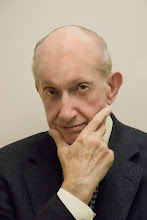
By H. N. BURDETT
State governments are reeling from recession-driven revenue declines, but the impetus for protesting thousands to descend upon Madison, Wisconsin, and other U.S. capitals owes at least as much to a January 2010 Supreme Court decision.
In Citizens United v. Federal Election Commission, the Court ruled that the government may not restrict political spending by corporations. Such limitations would be a denial of freedom of speech guaranteed by the First Amendment to the U.S. Constitution, according to the majority in that 5-4 decsion.
While the Citizens United ruling does not directly address labor unions, the implication seems clear enough that it applies to them as well. Labor unions and corporations have been among the more productive cash cows of the Democratic and Republican parties respectively.
GOP strategists see the crippling state deficits during the recession as an opportunity to severely weaken if not outright eliminate, the influence of unions during election campaigns, thereby tipping the scales in favor of corporation-backed Republican candidates.
The most convenient target for attacking collective bargaining -- anathema to big business and, therefore, to the GOP -- is organized labor in the public sector. It is hardly a coincidence that the service employees and teachers unions are among the largest and arguably most powerful in the country.
Brookings Institute senior fellow E. J. Dionne, Jr. recently wrote in The Washington Post that he was told by an unnamed pro-union consultant: "The game goes like this. Destroy private-sector unions, reduce private-sector health and retirement benefits, then say, 'Hey, how come these public employees get such [relatively] good benefits? That's not fair.'"
Dionne added that the anonymous consultant took exception to those claiming private-sector unions are all right but oppose public-sector unions: "Private-sector unions are only 'okay' once they are completely emasculated."
Under Wisconsin Governor Scott Walker's agenda, it would not be sufficient to merely reduce state employees' benefits to help lower the state's $3.6 billion deficit. His plan would eviscerate most of their collective bargaining rights. Benefits and working conditions would be removed from the bargaining table. Only basic pay would be negotiable. But even that would have to be kept in line with inflation.
With public-sector unions having roles in electing state legislators who determine their wages, they have undue political influence, according to the GOP mantra.
Meanwhile, a progressive think tank, Policy Matters Ohio, challenges the validity of the contention that public-sector unions are responsible for a significant amount of state government deficits. For example, last year the nine states that prohibit such unions had average shortfalls of 25 percent, compared to 24 percent in the 14 states that allow them.
New York City Mayor Michael R. Bloomberg reminded us in a New York Times op-ed article that taxpayers foot the bill for pensions, benefits and job security for public employees "that almost no one in the private sector enjoys." But Bloomberg contended that these costs, now growing at rates outpacing inflation, are simply unaffordable.
"Yes, public sector workers need a secure retirement," the mayor conceded. "And, yes, taxpayers need top-quality police officers, teachers and firefighters. It's the job of government to balance those competing needs. But for a variety of reasons, the scale has been increasingly tipping away from taxpayers."
Bloomberg noted that budget deficits are being used by several states to justify efforts to scale back "not only labor costs, but labor rights." He stressed, however, that unions "play a vital role in protecting against abuses in the workplace, and in my experience they are integral to training, deploying and managing a professional work force."
"We should no more try to take away the right of individuals to collectively bargain than we should try to take away the right to the secret ballot," the mayor argued.
He further observed that in Wisconsin, "proposals to rein in spending on labor contracts have included proposals to strip unions of their right to collectively bargain for pensions and health care benefits.
"Yet the problem is not unions expressing those rights: it is governments failing to adapt to the times and act in a fiscally responsible manner. . .Benefits agreed to
35 years ago that now are unaffordable should be reduced. Similarly work rules that made sense 70 years ago but are now antiquated should be changed."
Bloomberg concluded: "The job of labor leaders is to get the best deal for their members. The job of elected officials is to get the best deal for all citizens.
"Rather than declare war on unions, we should demand a new deal with them -- one that reflects today's econonmic realities and workplace conditions, not those of a century ago. If we fail to do that, the fault is not in our unions, or in our stars, but in ourselves."
As the situation now stands, the Supreme Court's Citizens United ruling has overturned decades of limitations on corporate spending to influence elections. Parlaying this with stripping unions of much of their hard-fought rights would gift wrap for big business a decided advantage in determining election outcomes.
In the current contentious climate, it would be well to remember that it is to organized labor that working men and women owe virtually every major right they have achieved from the minimum wage and the 40-hour week to workplace safety and laws restricting child labor.
Mayor Bloomberg is on target when he insists that collective bargaining must remain as sacroscanct as the secret ballot. Governor Walker and other state governors attempting to dilute or remove this right are indeed treading on their own constituents.
Saturday, March 5, 2011

Wednesday, February 23, 2011
SOMALI PIRATES EXTENDING OPERATIONS
By H. N. BURDETT
Somalia's statelessness, high fertility rate, large number of youths, its unemployment and poverty are all factors in the rampant piracy stretching across the Indian Ocean, says an authority on ship hijacking in the wake of four Americans killed by pirates on "Quest," a 58-foot custom-built yacht in the Gulf of Aden.
Lt. Cdr. Claude G. Berube, a reserve naval officer on active duty as a history professor at the Academy, says Somalia "has been a lawless state for the past twenty years" as piracy has grown, become more sophisticated and has spread far from the Somalia coastline. Berube has written extensively on piracy in academic journals as well as an unpublished novel.
Pirates in the area called "pirates' alley" generally release their hostages unharmed after collecting their ransoms. Two of the pirates who had seized the yacht with Americans aboard were negotiating for their release aboard a U.S. ship.
The motivations of the pirates who boarded the yacht of a Marina Del Rey, California couple, Jean and Scott Adams, for killing them and their crew, Phyllis Macay and Robert A. Riggle of Seattle, Washington, are so far "matters of speculation and conjecture," the professor said. Six of the pirates were also killed and 13 others were in U.S. Navy custody.
Armed with AK-47 automatic weapons and rocket-propelled grenades that Somali pirates "have been using for decades - weapons that can be found everywhere" throughout the region, Berube stressed, the outlaws have extended their search for prey to 50-100 nautical miles across the Indian Ocean and only about 40 nautical miles from India. "And they are now using satellite phones," he added.
Describing the pirates as "mostly young people, we're dealing with seventeen and eighteen-year-olds," Berube pointed out that they operate from skiffs launched from mother ship tankers and freighters.
Somalia's annual population growth rate is nearly 2.9 percent, the 16th largest in the world, more than 43 births per 1,000 population. Somali women have 6.4 births in their reproductive lifetime, the world's fourth highest fertility rate. More than 45 percent of the country's male population is under 15 years of age.
"The International Maritime Bureau classifies waters off of Somalia as some of the most dangerous in the world," Cdr. Berube says. Yet the shipping industry "has not seen (piracy) as a threat," he observes. Though President Obama has called piracy "a national emergency", he adds, "no one has taken full responsibility for dealing with the threat."
Betube stressed that there are three courses for dealing with piracy: private to public, nations hiring private maritime security; private to private, private sector firms hiring private security; and private ships with escorts supplied by national governments. Thus far, however, these options have been virtually ruled out as "too costly," the Naval Academy professor said.
The danger not being ignored is reports that the pirates have been negotiating with Al-Shabaab, a terrorist group operating in Somalia, with the latter receiving 20 percent of the hijacking profits for its cooperation.
According to New Yorker magazine writer Jon Lee Anderson, Al-Shabaab controls most of southern and central Somalia, including a large portion of the capital, Mogadishu, and has "declared war on the U.N. and on Western non-governmental organizations" that distribute food aid in Somalia. In the past two years, the group is believed to be responsible for killing 42 relief workers.
"Anywhere a state cannot control its own coastline, you're going to see piracy," Berube concluded.
Somalia's statelessness, high fertility rate, large number of youths, its unemployment and poverty are all factors in the rampant piracy stretching across the Indian Ocean, says an authority on ship hijacking in the wake of four Americans killed by pirates on "Quest," a 58-foot custom-built yacht in the Gulf of Aden.
Lt. Cdr. Claude G. Berube, a reserve naval officer on active duty as a history professor at the Academy, says Somalia "has been a lawless state for the past twenty years" as piracy has grown, become more sophisticated and has spread far from the Somalia coastline. Berube has written extensively on piracy in academic journals as well as an unpublished novel.
Pirates in the area called "pirates' alley" generally release their hostages unharmed after collecting their ransoms. Two of the pirates who had seized the yacht with Americans aboard were negotiating for their release aboard a U.S. ship.
The motivations of the pirates who boarded the yacht of a Marina Del Rey, California couple, Jean and Scott Adams, for killing them and their crew, Phyllis Macay and Robert A. Riggle of Seattle, Washington, are so far "matters of speculation and conjecture," the professor said. Six of the pirates were also killed and 13 others were in U.S. Navy custody.
Armed with AK-47 automatic weapons and rocket-propelled grenades that Somali pirates "have been using for decades - weapons that can be found everywhere" throughout the region, Berube stressed, the outlaws have extended their search for prey to 50-100 nautical miles across the Indian Ocean and only about 40 nautical miles from India. "And they are now using satellite phones," he added.
Describing the pirates as "mostly young people, we're dealing with seventeen and eighteen-year-olds," Berube pointed out that they operate from skiffs launched from mother ship tankers and freighters.
Somalia's annual population growth rate is nearly 2.9 percent, the 16th largest in the world, more than 43 births per 1,000 population. Somali women have 6.4 births in their reproductive lifetime, the world's fourth highest fertility rate. More than 45 percent of the country's male population is under 15 years of age.
"The International Maritime Bureau classifies waters off of Somalia as some of the most dangerous in the world," Cdr. Berube says. Yet the shipping industry "has not seen (piracy) as a threat," he observes. Though President Obama has called piracy "a national emergency", he adds, "no one has taken full responsibility for dealing with the threat."
Betube stressed that there are three courses for dealing with piracy: private to public, nations hiring private maritime security; private to private, private sector firms hiring private security; and private ships with escorts supplied by national governments. Thus far, however, these options have been virtually ruled out as "too costly," the Naval Academy professor said.
The danger not being ignored is reports that the pirates have been negotiating with Al-Shabaab, a terrorist group operating in Somalia, with the latter receiving 20 percent of the hijacking profits for its cooperation.
According to New Yorker magazine writer Jon Lee Anderson, Al-Shabaab controls most of southern and central Somalia, including a large portion of the capital, Mogadishu, and has "declared war on the U.N. and on Western non-governmental organizations" that distribute food aid in Somalia. In the past two years, the group is believed to be responsible for killing 42 relief workers.
"Anywhere a state cannot control its own coastline, you're going to see piracy," Berube concluded.
Wednesday, February 2, 2011
'BLACK WATCH': SURREALITY OF WAR
By H. N. Burdett
Acclaimed authors and artists have sought to depict war in novels, photographs, movies and on canvas with varying degrees of success. Moving as much of their work is, the pen, the brush and the camera all come up short.
William Tecumseh Sherman was speaking literally when he declared, "War is Hell!" And Hell is inexplicable. The anguish, the torment, the terror, the spectrum of conflicting battlefield emotions and reactions - from raging lunacy to numbing silence, from acts of commendable courage to quivering cowardice - stir the blood and twist the mind into conjuring endless nightmares of what has been witnessed and felt but can neither be easily digested nor wholly processed, much less satisfactorily explained.
General Sherman was right. War really is Hell. And Hell is not reality but rather surreality in the extreme. Yet it remains vitally important to probe and examine armed conflicts between nations, past and present.
Only by focusing on the causes and consequences of war can there be any hope at all that humankind can rise above and beyond these vestiges of barbarism deliberate and calculated that reap the ultimate devastation: the destruction of lives, the distortions of reason among substantial numbers of the survivors - the world's most precious treasure, those who would have been entrusted with its very future - thereby enervating the here and now and robbing us all of contributions that can never be known.
Even those who have emerged from the turmoil and turbulence of combat more or less physically intact are never the same as they were before they entered the killing fields. Few survivors of warfare readily step forward and describe what they have been through, and understandably so. Words fail. Soul-searching art, even combat photography - freezing for all time searing images of the precise moment the unspeakable happened -can never begin to expose the horror of war in its naked entirety. And yet the efforts are worthwhile.
"Black Watch," the much-heralded presentation of the National Theatre of Scotland offers a powerful portrayal of the ongoing incursions into Iraq and Afghanistan based on Gregory Burke's interviews with men who served in the legendary military unit named in its title.
The result, with masterful use of sights, sounds, music and choreography, is seminal in that it begins to capture the surreal as well as the reality of humankind's ultimate savagery. Burke's play has deservedly garnered the 2009 New York Drama Critics' Circle Award for best foreign play; four Laurence Olivier Awards for best play (Burke), director (John Tiffany), choreography (Steven Hoggett) and sound design (Gareth Fry), among others too numerous to mention in this space.
From the opening moments of "Black Watch," the coarseness of language may be seen as cheap theatrics to shock and awe the audience into full attention. Perhaps so, but this is the language of the barracks. A play derived from the spoken words of combat soldiers would lose credibility if their words were sanitized beyond their own recognition. By exercising patience, any initial discomfort from the raw language is likely to dissipate as the action progresses. This is not to suggest that anyone in the audience, even the more hard-core cynical among us, will settle back with ease; this production was created not so much to entertain as to encourage us to think about what we have seen and heard and to draw our own conclusions.
For the most part, young men joined the Black Watch less to become a part of a Noble Cause than because they needed jobs. What they found in Iraq and Afghanistan was substantially different from the experience of most combatants throughout the long, sordid history of man's quest for his enemy's blood.
Battlefield tactics and strategies often quickly transformed into anachronisms. Even anti-guerrilla warfare training in many respects dissolved into obsolescence. Here the enemy was inspired by spiritual rather than patriotic zealotry; the difference can be enormous.
The Black Watch and all the other men and women participating in the current unmitigated travesties are facing down enemies convinced they are carrying out the will of a Higher Being who calls on them to rid the earth of the infidel, that their death in this perceived holiest of services will be rewarded with the most wondrous gifts paradise offers or mere mortals can imagine.
It is this promise that has sufficed to supply the enemy with endless recruits for suicide missions. Missions which virtually turn on its head Patton's celebrated comment that wars are not won by poor bastards willing to die for their country, but rather by forcing other poor bastards die for their country.
The remarkable 10-member, all-male cast of "Black Watch," a number of whom are still in theatre training, are young enough, energetic enough and, above all, talented enough to easily persuade the audience that it is watching not actors but the real thing, as well as the surreal thing.
(Black Watch is currently running through Sunday, Feb. 6 at Washington, DC's Sidney Harman Hall, 610 F Street, N.W.)
Acclaimed authors and artists have sought to depict war in novels, photographs, movies and on canvas with varying degrees of success. Moving as much of their work is, the pen, the brush and the camera all come up short.
William Tecumseh Sherman was speaking literally when he declared, "War is Hell!" And Hell is inexplicable. The anguish, the torment, the terror, the spectrum of conflicting battlefield emotions and reactions - from raging lunacy to numbing silence, from acts of commendable courage to quivering cowardice - stir the blood and twist the mind into conjuring endless nightmares of what has been witnessed and felt but can neither be easily digested nor wholly processed, much less satisfactorily explained.
General Sherman was right. War really is Hell. And Hell is not reality but rather surreality in the extreme. Yet it remains vitally important to probe and examine armed conflicts between nations, past and present.
Only by focusing on the causes and consequences of war can there be any hope at all that humankind can rise above and beyond these vestiges of barbarism deliberate and calculated that reap the ultimate devastation: the destruction of lives, the distortions of reason among substantial numbers of the survivors - the world's most precious treasure, those who would have been entrusted with its very future - thereby enervating the here and now and robbing us all of contributions that can never be known.
Even those who have emerged from the turmoil and turbulence of combat more or less physically intact are never the same as they were before they entered the killing fields. Few survivors of warfare readily step forward and describe what they have been through, and understandably so. Words fail. Soul-searching art, even combat photography - freezing for all time searing images of the precise moment the unspeakable happened -can never begin to expose the horror of war in its naked entirety. And yet the efforts are worthwhile.
"Black Watch," the much-heralded presentation of the National Theatre of Scotland offers a powerful portrayal of the ongoing incursions into Iraq and Afghanistan based on Gregory Burke's interviews with men who served in the legendary military unit named in its title.
The result, with masterful use of sights, sounds, music and choreography, is seminal in that it begins to capture the surreal as well as the reality of humankind's ultimate savagery. Burke's play has deservedly garnered the 2009 New York Drama Critics' Circle Award for best foreign play; four Laurence Olivier Awards for best play (Burke), director (John Tiffany), choreography (Steven Hoggett) and sound design (Gareth Fry), among others too numerous to mention in this space.
From the opening moments of "Black Watch," the coarseness of language may be seen as cheap theatrics to shock and awe the audience into full attention. Perhaps so, but this is the language of the barracks. A play derived from the spoken words of combat soldiers would lose credibility if their words were sanitized beyond their own recognition. By exercising patience, any initial discomfort from the raw language is likely to dissipate as the action progresses. This is not to suggest that anyone in the audience, even the more hard-core cynical among us, will settle back with ease; this production was created not so much to entertain as to encourage us to think about what we have seen and heard and to draw our own conclusions.
For the most part, young men joined the Black Watch less to become a part of a Noble Cause than because they needed jobs. What they found in Iraq and Afghanistan was substantially different from the experience of most combatants throughout the long, sordid history of man's quest for his enemy's blood.
Battlefield tactics and strategies often quickly transformed into anachronisms. Even anti-guerrilla warfare training in many respects dissolved into obsolescence. Here the enemy was inspired by spiritual rather than patriotic zealotry; the difference can be enormous.
The Black Watch and all the other men and women participating in the current unmitigated travesties are facing down enemies convinced they are carrying out the will of a Higher Being who calls on them to rid the earth of the infidel, that their death in this perceived holiest of services will be rewarded with the most wondrous gifts paradise offers or mere mortals can imagine.
It is this promise that has sufficed to supply the enemy with endless recruits for suicide missions. Missions which virtually turn on its head Patton's celebrated comment that wars are not won by poor bastards willing to die for their country, but rather by forcing other poor bastards die for their country.
The remarkable 10-member, all-male cast of "Black Watch," a number of whom are still in theatre training, are young enough, energetic enough and, above all, talented enough to easily persuade the audience that it is watching not actors but the real thing, as well as the surreal thing.
(Black Watch is currently running through Sunday, Feb. 6 at Washington, DC's Sidney Harman Hall, 610 F Street, N.W.)
Friday, January 21, 2011
GUN RIGHTS, FREE SPEECH COLLIDE
By H. N. Burdett
Poignant and heart-wrenching as the aftermath of the Tucson tragedy has been -- six people killed, including a nine-year-old girl and a respected federal judge, the targeted congresswoman appearing headed for a miraculous recovery -- those holding out hope that a new Era of Good Feeling is now on the horizon qualify among the more cockeyed of all optimists.
When offensive racist remarks are uttered over the airwaves, the political correctness police swoop down and pull the plug from the offender's microphone. But the Limbaughs, Olbermanns, Becks and Maddows earn a comfortable living reinforcing partisanship with generous helpings of vitriol under the aegis of their First Amendment right cum duty.
Rather than serving to soften the tone and turning down the volume on this perpetual blame game, the Arizona massacre threatens to incite the wing nuts, right and left, to rev up their engines.
Liberal New York Times columnist Paul Krugman attributes alleged gunman Jared Loughner's shooting spree to inflammatory comments by Sarah Palin, Glenn Beck, the Tea Party and opponents of health care reform among others.
Conservative Washington Post columnist Charles Krauthammer counters: "Rarely in American political discourse has there been a charge so reckless, so scurrilous, and so unsupported by evidence."
Just as Krugman, a Nobel laureate economist, deserves attention when he pontificates on taxation and budget matters, so too should comments by Krauthammer, a psychiatrist as well as a Pulitzer Prize columnist, be taken seriously on the reportedly disturbed alleged gunman.
"Not only is there no evidence that Loughren was impelled to violence by any of those upon which Paul Krugman, Keith Olbermann, the New York Times, the Tucson sheriff and other rabid partisans are fixated," Krauthammer asserted, "there is no evidence that he was responding to anything, political or otherwise, outside of his own head."
Conservative New York Times columnist David Brooks accused liberals who point the finger of blame at right-wing vitriol purveyors for the Arizona shootings of "political opportunism."
Brooks and Krugman were eloquently answered in a Times letter to the editor written by Edward Abrahams of Bala Cynwyd, Pennsylvania: "While liberal columnists like Paul Krugman. . .emphasize the current political environment that they contend encourages outrage and violence, oonservatives, like David Brooks, point out that the suspect is mentally ill and answers mainly to the voices in his own head. Both offer interpretations that confirm their and their readers' worldview. Is it not possible that they are both right?"
In another letter to the Times, Howard Jay Meyer of Brooklyn, identifying himself as a Republican who believes in tougher gun laws and favors the right to bear arms but not for "deranged individuals," wrote: "The National Rifle Association is making it difficult for mayors across the country to crack down on illegal handguns. When any attack occurs, it's used as a reason for everyone to go out and buy a gun.
"I don't believe that sanity can prevail when it's easier to pull out a Glock 19 than it is to pull a lever on a voting machine. . .The death of another child changes things a bit, don't you think?"
Back to Krauthammer, who referred to the Wall Street Journal report of Loughner's high school classmates claiming that the alleged gunman's ravings were interspersed with "unnerving, long stupors of silence" during which he would "stare fixedly at his buddies." Krauthammer said Loughner's writings are confused, incoherent, punctuated with private numerology and inscrutable taxonomy: "He warns of government brainwashing and thought control through 'grammar.' He was obsessed with 'conscious dreaming,' a fairly good synonym for hallucination.
"This is not political behavior. These are the signs of clinical thought disorder when disconnected from each other, incoherent, delusional, detached from reality."
Krauthammer takes strong umbrage at liberal criticism of warlike metaphors used by Sarah Palin and others inciting violence. Such metaphors are rampant in describing politics, he observed. To illustrate, he mentioned a 2000 fundraiser in Philadelphia where Barack Obama said, "If they bring a knife to the fight, we bring a gun."
The columnist noted that fighting and warfare are "the most routine political metaphors. . .Historically speaking, all democratic politics is sublimation of the ancient route to power by military conquest. That's why the language persists. That's why we say without any self-consciousness such things as 'battleground' states or 'targeting' opponents. Indeed, the very word for an electoral contest --'campaign' -- is an appropriation from warfare."
Washington Post op-ed columnist Ruth Marcus observed that Loughner's Glock 19 semiautomatic pistol with an outsized magazine enabled him to get off 31 shots before reloading. A ban on manufacture of magazines of more than 10 rounds expired in 2004 and were it still in effect, Marcus said, "it would not stop crazed gunmen from inflicting damage, but it might limit the damage they could inflict."
John Velleco, spokesman for Gun Owners of America which Marcus said "manages the astonishing feat of making the NRA look reasonable," counters with: "If the government can ban magazines with 10 or more rounds, it can ban a magazine that holds five or more rounds. There is no way to stop the arbitrariness of that sort of legislation."
American Prospect magazine editor Harold Meyerson gets to the heart of the language of hate by recalling Glenn Beck's musing on his radio show last October about the prospect of government seizing his children if he refused to allow them to be given the flu vaccine. "You want to take my kids because of that?" Beck said. "Meet Mr. Smith and Mr. Wesson."
Meyerson further recalled that last April CNN commentator Erick Erickson questioned the legality of the U.S. Census Bureau's American Community Survey: "We have become, or are becoming, enslaved by our government. . .I dare 'em to try to throw me in jail. I dare 'em to. [I'll] pull out my wife's shotgun and see how that little ACS twerp likes being scared at the door."
The case Meyerson makes against right-wing paranoia seems ironclad. Has the government ever taken kids from anyone because of parents' failure to have them immunized? Has the government ever thrown anyone in jail for failure to comply with the census?
But here is Larry Pratt, executive director of the Gun Owners of America, at a rally in Washington last April: "We're in a war. The other side knows they are at war because they started it. They are coming for our freedom, for our money, for our kids, for our property. They are coming for everything because they are a bunch of socialists." And, of course, we all need to be armed to the teeth in order to fight back.
In yet another letter to the New York Times, Chris Librie of Racine, Wisconsin, wrote that all societies have mentally unstable citizens, "and yet the United States has a high rate of these killing sprees: Columbine, Fort Hood and Virginia Tech come to mind. These mass killings do not happen with such frequency in any other developed country. There must be unique contributing factors beyond the mere presence of mentally ill members in American society."
Librie said he could think of at least three such factors: "The easy,unfettered access to guns; the difficulty of obtaining health care for the mentally ill; the toxic and inflammatory political rhetoric in this country."
Citizen Librie laments that "it is easier to purchase a semiautomatic handgun than to operate a car in the United States." He further emphasizes the irony that the strong support of Loughner's targeted victim, Rep. Gabrielle Gifford, for the law to provide health care for more Americans like Loughner has inspired vitriolic opposition.
"All societies have their share of Loughners," Librie wrote, "but only the United States has the unique environment and lack of support systems that cause them to act out at a higher rate and with such devastating consequences."
While it may sound like the proverbial broken record, it is a self-evident truth that all rights carry with them responsibilities and all responsibilities have consequences. The Tucson shootings reflect a virtual collision of Americans' rights to free speech and to bear arms. Every society indeed does have its share of disturbed individuals, but few are endowed with the rights granted to citizens of the United States. It probably will be of little comfort to the friends and families of those killed in the Arizona massacre, but they were indeed part of the tragic price that is sometimes paid for the privilege of living in a free society.
Poignant and heart-wrenching as the aftermath of the Tucson tragedy has been -- six people killed, including a nine-year-old girl and a respected federal judge, the targeted congresswoman appearing headed for a miraculous recovery -- those holding out hope that a new Era of Good Feeling is now on the horizon qualify among the more cockeyed of all optimists.
When offensive racist remarks are uttered over the airwaves, the political correctness police swoop down and pull the plug from the offender's microphone. But the Limbaughs, Olbermanns, Becks and Maddows earn a comfortable living reinforcing partisanship with generous helpings of vitriol under the aegis of their First Amendment right cum duty.
Rather than serving to soften the tone and turning down the volume on this perpetual blame game, the Arizona massacre threatens to incite the wing nuts, right and left, to rev up their engines.
Liberal New York Times columnist Paul Krugman attributes alleged gunman Jared Loughner's shooting spree to inflammatory comments by Sarah Palin, Glenn Beck, the Tea Party and opponents of health care reform among others.
Conservative Washington Post columnist Charles Krauthammer counters: "Rarely in American political discourse has there been a charge so reckless, so scurrilous, and so unsupported by evidence."
Just as Krugman, a Nobel laureate economist, deserves attention when he pontificates on taxation and budget matters, so too should comments by Krauthammer, a psychiatrist as well as a Pulitzer Prize columnist, be taken seriously on the reportedly disturbed alleged gunman.
"Not only is there no evidence that Loughren was impelled to violence by any of those upon which Paul Krugman, Keith Olbermann, the New York Times, the Tucson sheriff and other rabid partisans are fixated," Krauthammer asserted, "there is no evidence that he was responding to anything, political or otherwise, outside of his own head."
Conservative New York Times columnist David Brooks accused liberals who point the finger of blame at right-wing vitriol purveyors for the Arizona shootings of "political opportunism."
Brooks and Krugman were eloquently answered in a Times letter to the editor written by Edward Abrahams of Bala Cynwyd, Pennsylvania: "While liberal columnists like Paul Krugman. . .emphasize the current political environment that they contend encourages outrage and violence, oonservatives, like David Brooks, point out that the suspect is mentally ill and answers mainly to the voices in his own head. Both offer interpretations that confirm their and their readers' worldview. Is it not possible that they are both right?"
In another letter to the Times, Howard Jay Meyer of Brooklyn, identifying himself as a Republican who believes in tougher gun laws and favors the right to bear arms but not for "deranged individuals," wrote: "The National Rifle Association is making it difficult for mayors across the country to crack down on illegal handguns. When any attack occurs, it's used as a reason for everyone to go out and buy a gun.
"I don't believe that sanity can prevail when it's easier to pull out a Glock 19 than it is to pull a lever on a voting machine. . .The death of another child changes things a bit, don't you think?"
Back to Krauthammer, who referred to the Wall Street Journal report of Loughner's high school classmates claiming that the alleged gunman's ravings were interspersed with "unnerving, long stupors of silence" during which he would "stare fixedly at his buddies." Krauthammer said Loughner's writings are confused, incoherent, punctuated with private numerology and inscrutable taxonomy: "He warns of government brainwashing and thought control through 'grammar.' He was obsessed with 'conscious dreaming,' a fairly good synonym for hallucination.
"This is not political behavior. These are the signs of clinical thought disorder when disconnected from each other, incoherent, delusional, detached from reality."
Krauthammer takes strong umbrage at liberal criticism of warlike metaphors used by Sarah Palin and others inciting violence. Such metaphors are rampant in describing politics, he observed. To illustrate, he mentioned a 2000 fundraiser in Philadelphia where Barack Obama said, "If they bring a knife to the fight, we bring a gun."
The columnist noted that fighting and warfare are "the most routine political metaphors. . .Historically speaking, all democratic politics is sublimation of the ancient route to power by military conquest. That's why the language persists. That's why we say without any self-consciousness such things as 'battleground' states or 'targeting' opponents. Indeed, the very word for an electoral contest --'campaign' -- is an appropriation from warfare."
Washington Post op-ed columnist Ruth Marcus observed that Loughner's Glock 19 semiautomatic pistol with an outsized magazine enabled him to get off 31 shots before reloading. A ban on manufacture of magazines of more than 10 rounds expired in 2004 and were it still in effect, Marcus said, "it would not stop crazed gunmen from inflicting damage, but it might limit the damage they could inflict."
John Velleco, spokesman for Gun Owners of America which Marcus said "manages the astonishing feat of making the NRA look reasonable," counters with: "If the government can ban magazines with 10 or more rounds, it can ban a magazine that holds five or more rounds. There is no way to stop the arbitrariness of that sort of legislation."
American Prospect magazine editor Harold Meyerson gets to the heart of the language of hate by recalling Glenn Beck's musing on his radio show last October about the prospect of government seizing his children if he refused to allow them to be given the flu vaccine. "You want to take my kids because of that?" Beck said. "Meet Mr. Smith and Mr. Wesson."
Meyerson further recalled that last April CNN commentator Erick Erickson questioned the legality of the U.S. Census Bureau's American Community Survey: "We have become, or are becoming, enslaved by our government. . .I dare 'em to try to throw me in jail. I dare 'em to. [I'll] pull out my wife's shotgun and see how that little ACS twerp likes being scared at the door."
The case Meyerson makes against right-wing paranoia seems ironclad. Has the government ever taken kids from anyone because of parents' failure to have them immunized? Has the government ever thrown anyone in jail for failure to comply with the census?
But here is Larry Pratt, executive director of the Gun Owners of America, at a rally in Washington last April: "We're in a war. The other side knows they are at war because they started it. They are coming for our freedom, for our money, for our kids, for our property. They are coming for everything because they are a bunch of socialists." And, of course, we all need to be armed to the teeth in order to fight back.
In yet another letter to the New York Times, Chris Librie of Racine, Wisconsin, wrote that all societies have mentally unstable citizens, "and yet the United States has a high rate of these killing sprees: Columbine, Fort Hood and Virginia Tech come to mind. These mass killings do not happen with such frequency in any other developed country. There must be unique contributing factors beyond the mere presence of mentally ill members in American society."
Librie said he could think of at least three such factors: "The easy,unfettered access to guns; the difficulty of obtaining health care for the mentally ill; the toxic and inflammatory political rhetoric in this country."
Citizen Librie laments that "it is easier to purchase a semiautomatic handgun than to operate a car in the United States." He further emphasizes the irony that the strong support of Loughner's targeted victim, Rep. Gabrielle Gifford, for the law to provide health care for more Americans like Loughner has inspired vitriolic opposition.
"All societies have their share of Loughners," Librie wrote, "but only the United States has the unique environment and lack of support systems that cause them to act out at a higher rate and with such devastating consequences."
While it may sound like the proverbial broken record, it is a self-evident truth that all rights carry with them responsibilities and all responsibilities have consequences. The Tucson shootings reflect a virtual collision of Americans' rights to free speech and to bear arms. Every society indeed does have its share of disturbed individuals, but few are endowed with the rights granted to citizens of the United States. It probably will be of little comfort to the friends and families of those killed in the Arizona massacre, but they were indeed part of the tragic price that is sometimes paid for the privilege of living in a free society.
Friday, December 31, 2010
BUSH'S MEMOIR ANECDOTES REVEAL PERHAPS MORE THAN HE INTENDED
by H.N. Burdett
Among the more fascinating books published during the past year was George W. Bush's Decision Points. Presidential memoirs are, of course, opportunities to present the case for the defense before historians, journalists and other assorted experts and upstarts have a chance to sharpen their long knives.
In this instance, there was an element of urgency. Had Nathan Miller lived to revise his book, Star-Spangled Men: America's 10 Worst Presidents, the 43rd President of the United States not only might well have appeared on the list, he might even have been at the very top.
On Bush's watch, pre-emptive war was waged against a nation erroneously believed to have had weapons of mass destruction leading to more than 100,000 verified Iraqi civilians and 3,000 Americans killed, as well as some 20,000 seriously wounded; the federal response was abysmally slow and inefficient to a category 5 hurricane that slammed into the Gulf Coast, wreaking havoc on parts of Mississippi, Alabama and Louisiana, killing 1,500 and leaving tens of thousands homeless; and, after four years of record surpluses under the Clinton Administration, the Bush Administration ran annual deficits of more than $300 billion.
By utilizing anecdotes rather than reciting treatises on policy, which various sources allege never much interested Bush, he often reveals perhaps more than he actually intended. Particularly intriguing were Bush's impressions of his closest advisers and aides, including Vice President Dick Cheney, Secretary of State Colin L. Powell, Secretary of Defense Donald Rumsfeld and his longtime political guru, Karl Rove, whom he refers to as like a "political mad scientist."
After mulling over his short-listed candidates for vice president, Bush "seriously thought about offering the job" to Missouri Senator Jack Danforth, who had "earned my respect with his defense of Clarence Thomas during his Supreme Court confirmation of 1991." But he turned to Dick Cheney, whose "experience was more extensive and diversified than that of anyone else on my list." Besides serving as President Gerald Ford's chief of staff and George H. W. Bush's secretary of defense, Cheney had run a global business and served a decade in Congress without losing an election.
"While Dick knew Washington better than about anyone, he didn't behave like an insider," Bush recalls. "He allowed subordinates to get credit. When he spoke at meetings, his carefully chosen words carried credibility and influence.
"Like me, Dick was a westerner. He enjoyed fishing and spending time outdoors. . . He had a practical mind and a dry sense of humor. He told me once he had started at Yale a few years before me, but the university asked him not to come back. Twice. He said he had once filled out a compatibility test designed to match his personality with the most appropriate career. When the results came in, Dick was told he was best suited to be a funeral director."
Karl Rove opposed Cheney's selection. Bush invited Rove to the governor's mansion to make his case. "I invited one person to listen in," Bush says. "That would be Dick. I believe in airing out disagreements. I also wanted to cement a relationship of trust between Karl and Dick in case they ended up together at the White House."
Rove contended "Cheney's presence on the ticket would add nothing to the electoral map, since Wyoming's three electoral votes were among the most reliably Republican in the country." Cheney's record in Congress was knee-jerk conservative and included some hot-button votes that could have been used against the ticket. And Cheney's heart condition "would raise questions about his fitness to serve." Furthermore, choosing George H. W. Bush's defense secretary "could make people question whether I was my own man." Bush 43 reveals that he did consult his father about the possibility of Cheney as vice president and that Bush 41 gave his former secretary of defense his blessing as a fine choice.
As Bush's first term was winding down, Cheney offered his resignation because, the president felt, a widespread impression persisted that the vice president was actually making all of the key White House decisions and by him leaving that notion would be disproved. While Bush says he appreciated the gesture, he told Cheney he wanted him at his side during a second term.
Secretary of Defense Rumsfeld also offered his resignation after photographs were released showing U.S. soldiers torturing Iraqi detainees. But the resignation was declined because Bush curiously claims he could think of no one to replace Rumsfeld.
Bush had initially wanted Rumsfeld to head the Central Intelligence Agency. But during his interview, Rumsfeld "laid out a captivating vision for transforming the Defense Department. He talked about making our forces lighter, more agile, and more readily deployed. . .Rumsfeld impressed me. He was knowledgeable, articulate and confident. As a former secretary of defense (25 years earlier, under Gerald Ford), he had strength and experience to bring major changes to the Pentagon. He would run the bureaucracy, not let the bureaucracy run him."
Bush says his first cabinet selection was an "easy" call: "Colin Powell would be my secretary of state." The two first met at Camp David in 1989 when Powell was chairman of the Joint Chiefs of Staff. Powell and Cheney were there to brief Bush's father on the surrender of Panamanian dictator Manuel Noriega.
"Colin was wearing his Army uniform," Bush recalls. "In contrast to the formality of his dress, he was good-natured and friendly. He spoke to everyone in the room, even bystanders like the president's children."
Bush was further impressed that Powell was admired both at home and abroad and could "credibly defend American interests and values, from a stronger NATO to freer trade. I believed Colin could be the second coming of George Marshall, a soldier turned statesman."
But there came a time when Bush had serious second thoughts about Secretary of State Powell.
In March 2001, a White House meeting was held on North Korea policy. The previous administration had offered concessions to North Korean dictator Kim Jong-il in return for his pledge to abandon that country's nuclear weapons programs. Bush maintains that the Clinton policy was a failure and he was determined that from then on, North Korea would have to change its behavior before America made concessions.
Early the next morning, he read an article in the Washington Post that began: "The Bush administration intends to pick up where the Clinton administration left off in negotiations with North Korea over its missile programs, Secretary of State Colin L. Powell said yesterday."
Bush was stunned. He figured the reporter must have misquoted Powell "because the story was the exact opposite of what we had discussed at the meeting." He phoned Condoleezza Rice and told her, "By the time Colin gets to the White House for the meeting, this had better be fixed."
"I had given Condi a daunting assignment," Bush writes. "She had to instruct the secretary of state, a world-famous former general, a generation older than she, to correct his quote. Later that morning, Colin came bounding into the Oval Office and said, 'Mr. President, don't worry. It's all been cleared up.'"
Bush also recounts how CIA director George Tenet recruited David Kay, the United Nations' chief inspector in Iraq in 1996, to lead a new inspection team to search for weapons of mass destruction in that country.
Following the inspection, Kay told Congress in October 2003 that Iraq's WMD programs spanned more than two decades, involved thousands of people, billions of dollars, and were elaborately shielded by security and deception operations that continued even beyond the end of Operation Iraqi Freedom.
"The left trotted out the mantra: 'Bush Lied, People Died,'" he says. "The charge was illogical. If I wanted to mislead the country into war, why would I pick an allegation that was certain to be disproven publicly shortly after we invaded the country? The charge was also dishonest. Members of the previous Washington administration, John Kerry and John Edwards, and the vast majority of Congress had also read the same intelligence that I had and concluded that Iraq had WMD. So had the intelligence agencies around the world. Nobody was lying. We were all wrong. The absence of WMD stockpiles did not change the fact that Saddam was a threat. In January 2004, David Kay said, 'It was reasonable to conclude that Iraq posed an imminent threat. . .What we learned during the inspection made Iraq a more dangerous place potentially than in fact we thought it was even before the war.'
"Still I knew the failure to find WMD would transform public perception of the war. While the world was undoubtedly safer with Saddam gone, the reality was that I had sent American troops into combat based in large part on intelligence that proved to be false. That was a massive blow to our credibility - my credibility - that would shake the confidence of the American people.
"No one was more shocked or angry than I was when we didn't find the weapons," Bush writes. "I had a sickening feeling every time I thought about it. I still do."
Bush, in fact, was so sickened that after it became apparent there were no WMD, he posed for photographs in which he turned one of the more horrific misuses of power by a United States commander-in-chief into the sickest of sick jokes. The cameras caught him mugging like a clueless chimpanzee, looking under White House furniture for weapons of mass destruction. Families of 3,000 young men and women who did not come home from Bush's pre-emptive war were not amused.
If a fair system of international justice existed, George W. Bush would not be living a life of ease at his Crawford, Texas ranch. He would be in the dock at The Hague responding to allegations of war crimes, along with Cheney, Rumsfeld and a few others who incessantly beat the drums for punishing two countries who had nothing to do with the 9/11 attacks. Meanwhile Osama bin Laden, who ordered the suicide assault on the World Trade Center and the Pentagon, continues to illude our forces while hooked up to his dialysis machine.
.
Among the more fascinating books published during the past year was George W. Bush's Decision Points. Presidential memoirs are, of course, opportunities to present the case for the defense before historians, journalists and other assorted experts and upstarts have a chance to sharpen their long knives.
In this instance, there was an element of urgency. Had Nathan Miller lived to revise his book, Star-Spangled Men: America's 10 Worst Presidents, the 43rd President of the United States not only might well have appeared on the list, he might even have been at the very top.
On Bush's watch, pre-emptive war was waged against a nation erroneously believed to have had weapons of mass destruction leading to more than 100,000 verified Iraqi civilians and 3,000 Americans killed, as well as some 20,000 seriously wounded; the federal response was abysmally slow and inefficient to a category 5 hurricane that slammed into the Gulf Coast, wreaking havoc on parts of Mississippi, Alabama and Louisiana, killing 1,500 and leaving tens of thousands homeless; and, after four years of record surpluses under the Clinton Administration, the Bush Administration ran annual deficits of more than $300 billion.
By utilizing anecdotes rather than reciting treatises on policy, which various sources allege never much interested Bush, he often reveals perhaps more than he actually intended. Particularly intriguing were Bush's impressions of his closest advisers and aides, including Vice President Dick Cheney, Secretary of State Colin L. Powell, Secretary of Defense Donald Rumsfeld and his longtime political guru, Karl Rove, whom he refers to as like a "political mad scientist."
After mulling over his short-listed candidates for vice president, Bush "seriously thought about offering the job" to Missouri Senator Jack Danforth, who had "earned my respect with his defense of Clarence Thomas during his Supreme Court confirmation of 1991." But he turned to Dick Cheney, whose "experience was more extensive and diversified than that of anyone else on my list." Besides serving as President Gerald Ford's chief of staff and George H. W. Bush's secretary of defense, Cheney had run a global business and served a decade in Congress without losing an election.
"While Dick knew Washington better than about anyone, he didn't behave like an insider," Bush recalls. "He allowed subordinates to get credit. When he spoke at meetings, his carefully chosen words carried credibility and influence.
"Like me, Dick was a westerner. He enjoyed fishing and spending time outdoors. . . He had a practical mind and a dry sense of humor. He told me once he had started at Yale a few years before me, but the university asked him not to come back. Twice. He said he had once filled out a compatibility test designed to match his personality with the most appropriate career. When the results came in, Dick was told he was best suited to be a funeral director."
Karl Rove opposed Cheney's selection. Bush invited Rove to the governor's mansion to make his case. "I invited one person to listen in," Bush says. "That would be Dick. I believe in airing out disagreements. I also wanted to cement a relationship of trust between Karl and Dick in case they ended up together at the White House."
Rove contended "Cheney's presence on the ticket would add nothing to the electoral map, since Wyoming's three electoral votes were among the most reliably Republican in the country." Cheney's record in Congress was knee-jerk conservative and included some hot-button votes that could have been used against the ticket. And Cheney's heart condition "would raise questions about his fitness to serve." Furthermore, choosing George H. W. Bush's defense secretary "could make people question whether I was my own man." Bush 43 reveals that he did consult his father about the possibility of Cheney as vice president and that Bush 41 gave his former secretary of defense his blessing as a fine choice.
As Bush's first term was winding down, Cheney offered his resignation because, the president felt, a widespread impression persisted that the vice president was actually making all of the key White House decisions and by him leaving that notion would be disproved. While Bush says he appreciated the gesture, he told Cheney he wanted him at his side during a second term.
Secretary of Defense Rumsfeld also offered his resignation after photographs were released showing U.S. soldiers torturing Iraqi detainees. But the resignation was declined because Bush curiously claims he could think of no one to replace Rumsfeld.
Bush had initially wanted Rumsfeld to head the Central Intelligence Agency. But during his interview, Rumsfeld "laid out a captivating vision for transforming the Defense Department. He talked about making our forces lighter, more agile, and more readily deployed. . .Rumsfeld impressed me. He was knowledgeable, articulate and confident. As a former secretary of defense (25 years earlier, under Gerald Ford), he had strength and experience to bring major changes to the Pentagon. He would run the bureaucracy, not let the bureaucracy run him."
Bush says his first cabinet selection was an "easy" call: "Colin Powell would be my secretary of state." The two first met at Camp David in 1989 when Powell was chairman of the Joint Chiefs of Staff. Powell and Cheney were there to brief Bush's father on the surrender of Panamanian dictator Manuel Noriega.
"Colin was wearing his Army uniform," Bush recalls. "In contrast to the formality of his dress, he was good-natured and friendly. He spoke to everyone in the room, even bystanders like the president's children."
Bush was further impressed that Powell was admired both at home and abroad and could "credibly defend American interests and values, from a stronger NATO to freer trade. I believed Colin could be the second coming of George Marshall, a soldier turned statesman."
But there came a time when Bush had serious second thoughts about Secretary of State Powell.
In March 2001, a White House meeting was held on North Korea policy. The previous administration had offered concessions to North Korean dictator Kim Jong-il in return for his pledge to abandon that country's nuclear weapons programs. Bush maintains that the Clinton policy was a failure and he was determined that from then on, North Korea would have to change its behavior before America made concessions.
Early the next morning, he read an article in the Washington Post that began: "The Bush administration intends to pick up where the Clinton administration left off in negotiations with North Korea over its missile programs, Secretary of State Colin L. Powell said yesterday."
Bush was stunned. He figured the reporter must have misquoted Powell "because the story was the exact opposite of what we had discussed at the meeting." He phoned Condoleezza Rice and told her, "By the time Colin gets to the White House for the meeting, this had better be fixed."
"I had given Condi a daunting assignment," Bush writes. "She had to instruct the secretary of state, a world-famous former general, a generation older than she, to correct his quote. Later that morning, Colin came bounding into the Oval Office and said, 'Mr. President, don't worry. It's all been cleared up.'"
Bush also recounts how CIA director George Tenet recruited David Kay, the United Nations' chief inspector in Iraq in 1996, to lead a new inspection team to search for weapons of mass destruction in that country.
Following the inspection, Kay told Congress in October 2003 that Iraq's WMD programs spanned more than two decades, involved thousands of people, billions of dollars, and were elaborately shielded by security and deception operations that continued even beyond the end of Operation Iraqi Freedom.
"The left trotted out the mantra: 'Bush Lied, People Died,'" he says. "The charge was illogical. If I wanted to mislead the country into war, why would I pick an allegation that was certain to be disproven publicly shortly after we invaded the country? The charge was also dishonest. Members of the previous Washington administration, John Kerry and John Edwards, and the vast majority of Congress had also read the same intelligence that I had and concluded that Iraq had WMD. So had the intelligence agencies around the world. Nobody was lying. We were all wrong. The absence of WMD stockpiles did not change the fact that Saddam was a threat. In January 2004, David Kay said, 'It was reasonable to conclude that Iraq posed an imminent threat. . .What we learned during the inspection made Iraq a more dangerous place potentially than in fact we thought it was even before the war.'
"Still I knew the failure to find WMD would transform public perception of the war. While the world was undoubtedly safer with Saddam gone, the reality was that I had sent American troops into combat based in large part on intelligence that proved to be false. That was a massive blow to our credibility - my credibility - that would shake the confidence of the American people.
"No one was more shocked or angry than I was when we didn't find the weapons," Bush writes. "I had a sickening feeling every time I thought about it. I still do."
Bush, in fact, was so sickened that after it became apparent there were no WMD, he posed for photographs in which he turned one of the more horrific misuses of power by a United States commander-in-chief into the sickest of sick jokes. The cameras caught him mugging like a clueless chimpanzee, looking under White House furniture for weapons of mass destruction. Families of 3,000 young men and women who did not come home from Bush's pre-emptive war were not amused.
If a fair system of international justice existed, George W. Bush would not be living a life of ease at his Crawford, Texas ranch. He would be in the dock at The Hague responding to allegations of war crimes, along with Cheney, Rumsfeld and a few others who incessantly beat the drums for punishing two countries who had nothing to do with the 9/11 attacks. Meanwhile Osama bin Laden, who ordered the suicide assault on the World Trade Center and the Pentagon, continues to illude our forces while hooked up to his dialysis machine.
.
Tuesday, December 14, 2010
LOOKING BACK TO THE STONE AGE
By H.N. BURDETT
The tax cut for the wealthiest Americans triggered my memory of a piece published by the nonpareil, I.F. Stone, on May 13, 1968, on the Poor People's March on Washington that was to be held later in that same month. After I found the article, my intention was to quote from it and discuss it within the context of the tax-cut deal the Obama administration made with the Republicans in Congress. It was the best deal President Obama thought he could make during the lame duck session, especially since he is looking ahead to two years of choosing between stagnation, capitulation or compromise. Upon reading Stone's insightful column, however, I couldn't bring myself to excerpt the piece; it is just too damn good. So here it is in its entirety:
THE RICH MARCH ON WASHINGTON ALL THE TIME
By I.F. STONE
No other western country permits such a large proportion of its people to endure the lives we press on our poor. To make four-fifths of a nation more affluent than any people in history, we have degraded one-fifth mercilessly.
REPORT OF THE CITIZENS INQUIRY INTO HUNGER
To see the Poor People's March on Washington in perspective, remember that the rich have been marching on Washington ever since the beginning of the Republic. They came in carriages and they come on jets. They don't have to put up in shanties. Their object is the same, but few respectable people are untactful enough to call it handouts. Washington owes its very existence as the capital to a deal for the benefit of wealthy speculators. They had bought up the deflated bonds issued to finance the revolution, paying as little as 15 cents on the dollar to the needy original investors. The speculators wanted repayment at full face value. It was only by promising to move the capital from Philadelphia to a new city to be built on the Potomac that Alexander Hamilton could get enough Southern votes to swing the deal.
The fiscal and banking system of the new republic was thus solidly established on the basis of a $20 million handout to the rich and on the Hamiltonian theory that if the new government would channel enough of the national wealth to the top some of it would eventually trickle down. In the meantime the farmer and the consumer would pay the taxes and the tariffs to keep the investor fat and happy. Ever since then the public treasury and the public lands have been a major source of the great American fortunes down to our own day of never-ending oil depletion allowances. The tax structure and the laws bear the imprint of countless marches on Washington; these have produced billions in hidden grants for those who least need them. Across the facade of the U.S. Treasury should be engraved, "To him who hath shall be given."
One easy and equitable way to finance an end to abject poverty in this country would be to end the many tax privileges the wealthy have acquired. A 12-man committee of industrialists and financiers has just recommended to Governor Rockefeller of New York a form of that guaranteed income the marching poor will demand. The committee proposes a negative income tax to raise 30 million of our neediest above the poverty level. Instead of paying income taxes they would receive enough from the Treasury to bring their incomes up to a minimum of $3,300 a year for a family of four. The additional cost would be about $11 billion a year. That is what the more obvious tax loopholes for the rich now drain from the U.S. Treasury.
Few people realize that our present tax and welfare structure is such as to encourage the wealthy to speculate and the poor to vegetate. If a rich man wants to speculate, he is encouraged by preferential capital gains which give him a 25 percent cushion against losses and take less than half as much on his speculative gains as on his normal earnings. But if a poor man on relief took a part time job, he had until very recently to pay a 100 percent tax on his earnings in the shape of a dollar-for-dollar reduction in his relief allowance. Even now after a belated reform in the welfare system, a poor man on relief, after his first $30 a month in extra earnings, must turn back to the Treasury 70 cents on the dollar while the rich man need pay the Treasury only 25 cents of every dollar he wins on the market even when his normal income tax rate is more than 50 percent. Such is the topsy-turvy morality of the Internal Revenue laws.
A heart-breaking report on hunger by a Citizens Board of Inquiry has just lifted the curtain on why the poor are marching. In the richest country in the world people eat clay to still the pains of an empty belly, children come to school too hungry to learn, and the infants of the poor suffer irreversible brain damage from protein deprivation. Much of the crime in the streets springs from hunger in the home. Much of this hunger is also linked to hand-outs for those who do not need them. Some of its roots may be found in subsidy programs designed to encourage farmers to make more money by producing less food. The effect has been to push the poor off the land and into the ghettoes. A program designed 30 years ago designed ostensibly to help the desperate family farmer has become a source of huge handouts to big farmers and farm corporations.
In 1967 the 41.7 percent of farmers with incomes of less than $2,500 a year received only 4.5 percent of total farm subsidies paid by the government while the top 10 percent, many of them farm corporations or vertical trusts in food processing, received 64.5 percent of these subsidies. The contrast between these handouts for rich farming interests and the stingy surplus food allotments for the poor is dramatically displayed in the statistical appendices of the Citizens Report on Hunger. In the calendar year 1966 a quarter billion dollars in farm subsidies was paid to a lucky landowning two one-hundredths of one percent of the population of Texas while the 28.8 percent of its population below the poverty line received less than $8 million in all forms of food assistance. Such grotesque maldistribution of federal aid is not limited to the South. That same year the U.S. Treasury paid almost $36 million in farm subsidies to one-third of one percent of the population of Nebraska while only $957,000 in surplus food allotments went to the 26.1 percent of its population which is in poverty. One farm company in California, J.G. Boswell, was given $2,807,633 in handouts by the Treasury that year and the Hawaiian Commercial and Sugar Company got $1,236,355 in federal sweetening.
Such are the huge hogs that crowd our public trough. Other even bigger corporations live on the gravy that drips from the military and space programs. We may never reach the moon - or know what to do with it when we get there - but the race for it has already created a new generation of Texas millionaires. The arms race and the space race guarantee the annual incomes of many in the country club set.
Even before the marchers began arriving, the President at his latest press conference was already inviting them to leave. Their demands would be "seriously" considered, he said, "and then we expect to get on with running the government as it should be." For years "running the government as it should be," i.e., with a budget allocated 80 percent to the Pentagon and 10 percent to health, education and welfare.
Ours is a warfare, not a welfare state. And unless the better conscience of the country can be mobilized, it will wage war upon the poor, too. Only twice before in our history have the poor marched on Washington - Coxey's Army of the jobless back in 1894 and the bonus marchers in 1932. Both times they were easily dispersed by force. The last heartless chapter of the flinty Hoover Administration was the attack of General MacArthur's troops upon the encampment of the bonus marchers on the Anacostia flats. This time the shanties will not be burned down nor the poor scattered so easily. A clash would set off the hottest summer yet of our nascent civil war. The poor may prove an irresistible force. The Congress is certainly an immovable object.
At this dangerous juncture we need a crusade of the progressive well-to-do to supplement the efforts of the Poor People's March. We are glad to see that SANE and a group of other organizations is calling for demonstrations of stupport throughout the country for Saturday, May 25. We need volunteers to stand on street corners and collect money to feed the encampment of the poor in Washington. And we need an army of young white idealists to ring doorbells in the suburbs and awaken the middle class to the crisis the poor may precipitate. What lies ahead may be far more important than the election.
We wish the unaware millions of the suburbs could have heard the extraordinary collection of spokesmen for the poor whom the Reverend Ralph David Abernathy brought to Wesley A.M.E. Church for a preliminary rally here last week. The volcanic despair of our Negroes, Puerto Ricans, Indians, Spanish Americans and poor whites has thrown up new and unknown leaders able to present their case with an untaught and unmatchable eloquence. The descenders of the enslaved, the conquered and the dispossessed have found voices which makes one realize what human resources lie untapped among them. It was also thrilling in a time of rising separation to join hands again with blacks in singing, "We Shall Overcome" and to feel how truly this movement stems from Martin Luther King's teaching. If this fails, multi-racialism and non-violence will fail with it. Yet fail it must unless the middle class and the suburbs can be aroused to pressure Congress for the steps required to wipe out poverty. "There is nothing," Martin Luther King said, "except a tragic death wish, to prevent us from reordering our priorities, so the pursuit of peace will take precedence over the pursuit of war." Now is the time for the white and the fortunate to organize for this work of solidarity. This - it cannot be said too often - may be our last chance.
The tax cut for the wealthiest Americans triggered my memory of a piece published by the nonpareil, I.F. Stone, on May 13, 1968, on the Poor People's March on Washington that was to be held later in that same month. After I found the article, my intention was to quote from it and discuss it within the context of the tax-cut deal the Obama administration made with the Republicans in Congress. It was the best deal President Obama thought he could make during the lame duck session, especially since he is looking ahead to two years of choosing between stagnation, capitulation or compromise. Upon reading Stone's insightful column, however, I couldn't bring myself to excerpt the piece; it is just too damn good. So here it is in its entirety:
THE RICH MARCH ON WASHINGTON ALL THE TIME
By I.F. STONE
No other western country permits such a large proportion of its people to endure the lives we press on our poor. To make four-fifths of a nation more affluent than any people in history, we have degraded one-fifth mercilessly.
REPORT OF THE CITIZENS INQUIRY INTO HUNGER
To see the Poor People's March on Washington in perspective, remember that the rich have been marching on Washington ever since the beginning of the Republic. They came in carriages and they come on jets. They don't have to put up in shanties. Their object is the same, but few respectable people are untactful enough to call it handouts. Washington owes its very existence as the capital to a deal for the benefit of wealthy speculators. They had bought up the deflated bonds issued to finance the revolution, paying as little as 15 cents on the dollar to the needy original investors. The speculators wanted repayment at full face value. It was only by promising to move the capital from Philadelphia to a new city to be built on the Potomac that Alexander Hamilton could get enough Southern votes to swing the deal.
The fiscal and banking system of the new republic was thus solidly established on the basis of a $20 million handout to the rich and on the Hamiltonian theory that if the new government would channel enough of the national wealth to the top some of it would eventually trickle down. In the meantime the farmer and the consumer would pay the taxes and the tariffs to keep the investor fat and happy. Ever since then the public treasury and the public lands have been a major source of the great American fortunes down to our own day of never-ending oil depletion allowances. The tax structure and the laws bear the imprint of countless marches on Washington; these have produced billions in hidden grants for those who least need them. Across the facade of the U.S. Treasury should be engraved, "To him who hath shall be given."
One easy and equitable way to finance an end to abject poverty in this country would be to end the many tax privileges the wealthy have acquired. A 12-man committee of industrialists and financiers has just recommended to Governor Rockefeller of New York a form of that guaranteed income the marching poor will demand. The committee proposes a negative income tax to raise 30 million of our neediest above the poverty level. Instead of paying income taxes they would receive enough from the Treasury to bring their incomes up to a minimum of $3,300 a year for a family of four. The additional cost would be about $11 billion a year. That is what the more obvious tax loopholes for the rich now drain from the U.S. Treasury.
Few people realize that our present tax and welfare structure is such as to encourage the wealthy to speculate and the poor to vegetate. If a rich man wants to speculate, he is encouraged by preferential capital gains which give him a 25 percent cushion against losses and take less than half as much on his speculative gains as on his normal earnings. But if a poor man on relief took a part time job, he had until very recently to pay a 100 percent tax on his earnings in the shape of a dollar-for-dollar reduction in his relief allowance. Even now after a belated reform in the welfare system, a poor man on relief, after his first $30 a month in extra earnings, must turn back to the Treasury 70 cents on the dollar while the rich man need pay the Treasury only 25 cents of every dollar he wins on the market even when his normal income tax rate is more than 50 percent. Such is the topsy-turvy morality of the Internal Revenue laws.
A heart-breaking report on hunger by a Citizens Board of Inquiry has just lifted the curtain on why the poor are marching. In the richest country in the world people eat clay to still the pains of an empty belly, children come to school too hungry to learn, and the infants of the poor suffer irreversible brain damage from protein deprivation. Much of the crime in the streets springs from hunger in the home. Much of this hunger is also linked to hand-outs for those who do not need them. Some of its roots may be found in subsidy programs designed to encourage farmers to make more money by producing less food. The effect has been to push the poor off the land and into the ghettoes. A program designed 30 years ago designed ostensibly to help the desperate family farmer has become a source of huge handouts to big farmers and farm corporations.
In 1967 the 41.7 percent of farmers with incomes of less than $2,500 a year received only 4.5 percent of total farm subsidies paid by the government while the top 10 percent, many of them farm corporations or vertical trusts in food processing, received 64.5 percent of these subsidies. The contrast between these handouts for rich farming interests and the stingy surplus food allotments for the poor is dramatically displayed in the statistical appendices of the Citizens Report on Hunger. In the calendar year 1966 a quarter billion dollars in farm subsidies was paid to a lucky landowning two one-hundredths of one percent of the population of Texas while the 28.8 percent of its population below the poverty line received less than $8 million in all forms of food assistance. Such grotesque maldistribution of federal aid is not limited to the South. That same year the U.S. Treasury paid almost $36 million in farm subsidies to one-third of one percent of the population of Nebraska while only $957,000 in surplus food allotments went to the 26.1 percent of its population which is in poverty. One farm company in California, J.G. Boswell, was given $2,807,633 in handouts by the Treasury that year and the Hawaiian Commercial and Sugar Company got $1,236,355 in federal sweetening.
Such are the huge hogs that crowd our public trough. Other even bigger corporations live on the gravy that drips from the military and space programs. We may never reach the moon - or know what to do with it when we get there - but the race for it has already created a new generation of Texas millionaires. The arms race and the space race guarantee the annual incomes of many in the country club set.
Even before the marchers began arriving, the President at his latest press conference was already inviting them to leave. Their demands would be "seriously" considered, he said, "and then we expect to get on with running the government as it should be." For years "running the government as it should be," i.e., with a budget allocated 80 percent to the Pentagon and 10 percent to health, education and welfare.
Ours is a warfare, not a welfare state. And unless the better conscience of the country can be mobilized, it will wage war upon the poor, too. Only twice before in our history have the poor marched on Washington - Coxey's Army of the jobless back in 1894 and the bonus marchers in 1932. Both times they were easily dispersed by force. The last heartless chapter of the flinty Hoover Administration was the attack of General MacArthur's troops upon the encampment of the bonus marchers on the Anacostia flats. This time the shanties will not be burned down nor the poor scattered so easily. A clash would set off the hottest summer yet of our nascent civil war. The poor may prove an irresistible force. The Congress is certainly an immovable object.
At this dangerous juncture we need a crusade of the progressive well-to-do to supplement the efforts of the Poor People's March. We are glad to see that SANE and a group of other organizations is calling for demonstrations of stupport throughout the country for Saturday, May 25. We need volunteers to stand on street corners and collect money to feed the encampment of the poor in Washington. And we need an army of young white idealists to ring doorbells in the suburbs and awaken the middle class to the crisis the poor may precipitate. What lies ahead may be far more important than the election.
We wish the unaware millions of the suburbs could have heard the extraordinary collection of spokesmen for the poor whom the Reverend Ralph David Abernathy brought to Wesley A.M.E. Church for a preliminary rally here last week. The volcanic despair of our Negroes, Puerto Ricans, Indians, Spanish Americans and poor whites has thrown up new and unknown leaders able to present their case with an untaught and unmatchable eloquence. The descenders of the enslaved, the conquered and the dispossessed have found voices which makes one realize what human resources lie untapped among them. It was also thrilling in a time of rising separation to join hands again with blacks in singing, "We Shall Overcome" and to feel how truly this movement stems from Martin Luther King's teaching. If this fails, multi-racialism and non-violence will fail with it. Yet fail it must unless the middle class and the suburbs can be aroused to pressure Congress for the steps required to wipe out poverty. "There is nothing," Martin Luther King said, "except a tragic death wish, to prevent us from reordering our priorities, so the pursuit of peace will take precedence over the pursuit of war." Now is the time for the white and the fortunate to organize for this work of solidarity. This - it cannot be said too often - may be our last chance.
Friday, December 10, 2010
TAX-CUT DEAL: ENGINE FOR CHANGE?
Maybe the tipping point has been reached. Maybe Democrats will hereafter so maintain their anger over the tax-cut deal that they will go on the offensive. Maybe the party of Andrew Jackson, the very personification of American toughness and resolve, will stop whimpering like a horde of mama's boys about being picked on, and apart, by schoolyard bully Republicans. Maybe the party of Harry "Give 'em hell" Truman will now begin operating from a position of strength that should be the birthright of the champions of working men and women, of social justice, and of all of those unlucky enough to be bypassed when silver spoons were distributed. Just maybe.
Thus far Democrats of recent vintage have demonstrated scant inclination and even less stomach for taking on the wealthiest Americans who believe they are deserving of special favors from the political party for which they have paid and are paying handsomely, building in the process a powerful propaganda machine that almost routinely convinces the majority of the electorate to vote against its own interests.
It is the same Republican party that back in the mid-1930s fought against workmen's compensation and Social Security as a sure path to the perdition of socialism and communism. The same GOP that a few decades later blathered that Medicare and Medicaid would surely be the end of the great experiment in democracy forged by the founding fathers. The same GOP that only last year voted in lockstep against extending health insurance to some 30 million people who do not now have it.
It is the same GOP that has preached with conviction borne of exceptional hubris the mantra that laissez-faire capitalism is the heart and soul of the nation, that rules and regulations shackle the economy from seeking its own level. In other words, let Wall Street operate above and beyond the law and the people will inevitably prosper. Prime the pump from the top and wealth will trickle down to the rest of us.
Precisely this kind of thinking did less to spread wealth than it did to compound the fiction that right here in the United States every mother's son and daughter can line their pockets if only the smartest investors are allowed to put deals together and buy and sell totally unfettered. Prime it from the top and everyone prospers.
That kind of thinking led in time to Enron, Madoff, and such outrages as cigarette manufacturers expressing no moral reservations about spiking their product to ensure addiction. That kind of thinking brought the implosion of the U.S. economy and ultimately the global economy. Advertise something-for-nothing and the suckers will line up to get their 'share.' But meanwhile, the tail must continue to wag the dog.
And so, with the days of the lame duck Congress dwindling down -- one in which the Democrats have a paper majority in both the Houses, overstated by the inclusion of blue dogs who often enough have voted with the minority -- an onerous tax deal is struck. In the bargain, the GOP achieved its goal of extending the Bush tax cuts, including those for the wealthiest 2 per cent of Americans.
No one can guarantee how much of the tax reduction would bolster the economy against how much would serve to further bloat the deficit or lower unemployment. To say nothing of the likelihood that extensions of the tax cut will lead to it becoming permanent, with, as Princeton economist Paul Krugman termed it "devastating effects on the budget and the long-term prospects for Social Security and Medicare."
The tradeoff to assure welfare to the wealthiest includes the extension of benefits for the unemployed; a temporary cut in the payroll tax, and tax breaks for investment. How much of this would funnel into the economy is a matter of conjecture, punctuated by doubt.
Progressives are rightfully incensed. A filibuster may be in the offing. Suggestions have been made that President Obama's capitulation to the GOP requires retribution in the form of support for a liberal presidential candidate to oppose him in the 2012 Democratic primary election.
As difficult as the deal may be for most Democrats to swallow, once the new Republican majority House of Representatives and virtually equally split Senate is seated in January, Democrats are unlikely to have much to celebrate over the next two years. With time running out on the lame ducks, a protracted stand on Democratic party principles is countered by nearly one in 10 Americans jobless and the distinct possibility that unemployment will worsen. The economy has deteriorated to the point where even temporary relief is welcome.
The danger inherent in the current scenario is Democrats engaging in circular finger-pointing rather than retaliating with a united front against the efficiency of the GOP machine that brought on the untenable circumstances that have been likened to blackmail and the holding of hostages.
With President Obama making what is perceived as over-the-top concessions to the GOP after interminable polarization of the two major parties, the tax-cut deal, unattractive as it is, may mark the last best chance to achieve bipartisanship that could determine the future of nothing less than the great American experiment in the durability of democracy.
Thus far Democrats of recent vintage have demonstrated scant inclination and even less stomach for taking on the wealthiest Americans who believe they are deserving of special favors from the political party for which they have paid and are paying handsomely, building in the process a powerful propaganda machine that almost routinely convinces the majority of the electorate to vote against its own interests.
It is the same Republican party that back in the mid-1930s fought against workmen's compensation and Social Security as a sure path to the perdition of socialism and communism. The same GOP that a few decades later blathered that Medicare and Medicaid would surely be the end of the great experiment in democracy forged by the founding fathers. The same GOP that only last year voted in lockstep against extending health insurance to some 30 million people who do not now have it.
It is the same GOP that has preached with conviction borne of exceptional hubris the mantra that laissez-faire capitalism is the heart and soul of the nation, that rules and regulations shackle the economy from seeking its own level. In other words, let Wall Street operate above and beyond the law and the people will inevitably prosper. Prime the pump from the top and wealth will trickle down to the rest of us.
Precisely this kind of thinking did less to spread wealth than it did to compound the fiction that right here in the United States every mother's son and daughter can line their pockets if only the smartest investors are allowed to put deals together and buy and sell totally unfettered. Prime it from the top and everyone prospers.
That kind of thinking led in time to Enron, Madoff, and such outrages as cigarette manufacturers expressing no moral reservations about spiking their product to ensure addiction. That kind of thinking brought the implosion of the U.S. economy and ultimately the global economy. Advertise something-for-nothing and the suckers will line up to get their 'share.' But meanwhile, the tail must continue to wag the dog.
And so, with the days of the lame duck Congress dwindling down -- one in which the Democrats have a paper majority in both the Houses, overstated by the inclusion of blue dogs who often enough have voted with the minority -- an onerous tax deal is struck. In the bargain, the GOP achieved its goal of extending the Bush tax cuts, including those for the wealthiest 2 per cent of Americans.
No one can guarantee how much of the tax reduction would bolster the economy against how much would serve to further bloat the deficit or lower unemployment. To say nothing of the likelihood that extensions of the tax cut will lead to it becoming permanent, with, as Princeton economist Paul Krugman termed it "devastating effects on the budget and the long-term prospects for Social Security and Medicare."
The tradeoff to assure welfare to the wealthiest includes the extension of benefits for the unemployed; a temporary cut in the payroll tax, and tax breaks for investment. How much of this would funnel into the economy is a matter of conjecture, punctuated by doubt.
Progressives are rightfully incensed. A filibuster may be in the offing. Suggestions have been made that President Obama's capitulation to the GOP requires retribution in the form of support for a liberal presidential candidate to oppose him in the 2012 Democratic primary election.
As difficult as the deal may be for most Democrats to swallow, once the new Republican majority House of Representatives and virtually equally split Senate is seated in January, Democrats are unlikely to have much to celebrate over the next two years. With time running out on the lame ducks, a protracted stand on Democratic party principles is countered by nearly one in 10 Americans jobless and the distinct possibility that unemployment will worsen. The economy has deteriorated to the point where even temporary relief is welcome.
The danger inherent in the current scenario is Democrats engaging in circular finger-pointing rather than retaliating with a united front against the efficiency of the GOP machine that brought on the untenable circumstances that have been likened to blackmail and the holding of hostages.
With President Obama making what is perceived as over-the-top concessions to the GOP after interminable polarization of the two major parties, the tax-cut deal, unattractive as it is, may mark the last best chance to achieve bipartisanship that could determine the future of nothing less than the great American experiment in the durability of democracy.
Subscribe to:
Posts (Atom)